|
 |
 |
 |
 |
 |
 |
 |
 |

 |
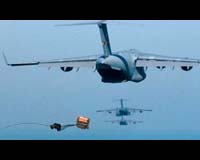
Qinetiq Subsidiary's Precision Airdrop System Used By USAF In Afghanistan
Kabul, Afghanistan (SPX) Sep 26, 2006 Precision Airdrop System (PADS), a system developed by Planning Systems Inc (PSI) a QinetiQ subsidiary, is now being successfully used in Afghanistan by the US Air Force to resupply troops, from high altitude drops with pinpoint accuracy. "With this system, we are able to drop from up to 25,000 feet and many miles away from the drop zone with exacting precision to troops who may be in an isolated base camp up on the top of a mountain ledge," Lt Gen Gary North, commander of Central Air Forces and the Ninth Air Force said. "To be able to deliver at night, and within feet of exactly where you put the 'X' on the ground, is a wonderful thing." PADS uses Global Positioning System (GPS) technology that permits Air Force aircrews to literally steer and fly a cargo pallet to the desired location, increasing the margin of safety for the aircrews. They can also land the cargo in a way that keeps the troops from having to scatter over a wide area and potentially making them vulnerable to hostile fire, when retrieving needed supplies. PSI has been working on the PADS system with the US Air Force and US Army since 1999. "PSI welcomes the news that our PADS technology has been successfully used in Afghanistan with such outstanding results," said Dr Alan Friedman, president and CEO of PSI. "This is an example of how technology can be adapted to make military operations safer and more efficient, and more adaptable to the demands of current and future conflicts." Community Email This Article Comment On This Article Related Links The latest in Military Technology for the 21st century at SpaceWar.com The latest in Military Technology for the 21st century at SpaceWar.com
 Mighty F-35 Lightning 2 Engine Roars To Life
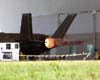 Fort Worth TX (SPX) Sep 21, 2006
The Lockheed Martin F-35 Lightning II completed its first series of engine runs on Monday afternoon, culminating in a full-afterburner test that unleashed 40,000 pounds of thrust - the most ever from a jet-fighter engine. The testing began on Friday, Sept. 15, when Chief Pilot Jon Beesley moved a cockpit switch to the "run" position and brought the Pratt and Whitney [NYSE: UTX] F135 engine to life. |
|
|

| The content herein, unless otherwise known to be public domain, are Copyright 1995-2006 - SpaceDaily.AFP and UPI Wire Stories are copyright Agence France-Presse and United Press International. ESA PortalReports are copyright European Space Agency. All NASA sourced material is public domain. Additionalcopyrights may apply in whole or part to other bona fide parties. Advertising does not imply endorsement,agreement or approval of any opinions, statements or information provided by SpaceDaily on any Web page published or hosted by SpaceDaily. Privacy Statement |