|
 |
 |
 |
 |
 |
 |
 |
 |

 |
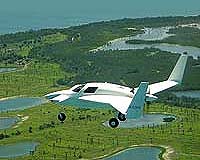
Proxy Aviation Completes Cooperative Flight Demonstration OF UAV For USAF
Germantown MD (SPX) Aug 08, 2007 Proxy Aviation System announced that it successfully completed a series of demonstrations of the cooperative flight capabilities of its SkyWatcher and SkyRaider unmanned aerial vehicles, managed by its SkyForce Distributed Management System. The U.S. Air Force contracted with Proxy to perform these tests under the operational control of the USAF UAV Battle Lab. The demonstration, called Cooperative Rules Based Reconnaissance Unmanned System (CRBRUS), was conducted at Creech Air Force Base, Indian Springs, Nevada from July 1-11, 2007. CRBRUS marked the first successful demonstration of multiple UAVs performing fully autonomous cooperative flight. SkyWatcher and SkyRaider, with two simulated UAVs (each flown by its own onboard Virtual Pilot), communicated over a common mesh network, thus allowing one operator to manage all four UAVs. SkyForce's network-centric software allowed the four aircraft to accomplish diverse group tactical goals with varying levels of operator control. SkyForce is designed to operate as many as 12 airborne UAVs and 20 ground nodes concurrently. The cooperating UAV constellation, which carried FLIR Star Saphire III sensors on the live UAVs, successfully performed nine missions in nine days logging 49 flight hours in record-breaking temperatures. The USAF established the cooperative flight objectives, testing Proxy's UAS in a series of complex and dynamic intelligence, surveillance and reconnaissance (ISR) and hunter-killer scenarios. Test criteria included target search, simulated weapons and multiple sensor employment, dynamic mission re-tasking, formation flying, collision avoidance and automatic take-off and landing. Notably, these demonstrations marked the first operational display of SkyRaider, which features retractable gear, a 1000-lb payload and the capacity to operate in high-density altitudes, among other advanced performance features. Lt. Col. Kent Shin, Assistant for Security Policy and Programs for the Secretary of the Air Force and the Project Lead for CRBRUS, said, "The UAV Battle Lab and the Proxy team worked well together to successfully accomplish all the goals set for the Creech AFB demonstration. The Air Force is very pleased with the results and excited about the performance of Proxy's cooperative flight system under operationally realistic conditions." SkyWatcher is designed for medium-endurance, low- and medium-altitude ISR missions, while SkyRaider is engineered for heavy-payload missions requiring the carriage and release of external stores. SkyForce DMS, which controls both SkyWatcher and SkyRaider, has the built-in intelligence to formulate entirely independent decisions based on changing mission criteria during flight without human intervention. This feature makes it unique from any UAV system on the market today. "The CRBRUS program demonstrated the advantage of having complementary sensor types operate in concert from their 'sweet spot' altitude and flight pattern and merge the derived information. The combined effect was enhanced target validation and reduced kill-chain timeline. The demonstration results provide clear-cut evidence for both the effectiveness of this approach and the far-reaching potential it holds," said Don Ryan, CEO, Proxy Aviation. Community Email This Article Comment On This Article Related Links Proxy Aviation Systems UAV News - Suppliers and Technology
 Second Predator Crashes In Iraq In Two Days
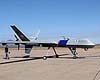 Balad Air Base, Iraq (AFNS) Aug 07, 2007
An Air Force MQ-1 Predator unmanned aerial vehicle crashed off base Tuesday at approximately 8 p.m. local time. This was the second Predator to crash in Iraq in two days. Hostile activity does not appear to be a factor in either crash. The crash site is in an unpopulated area and no collateral damage or injuries occurred. A board will be convened to investigate the incident. The aircraft is a medium-altitude long-endurance, remotely piloted aircraft. The MQ-1's primary mission is conducting armed reconnaissance. |
|
|

| The content herein, unless otherwise known to be public domain, are Copyright 1995-2007 - SpaceDaily.AFP and UPI Wire Stories are copyright Agence France-Presse and United Press International. ESA Portal Reports are copyright European Space Agency. All NASA sourced material is public domain. Additional copyrights may apply in whole or part to other bona fide parties. Advertising does not imply endorsement,agreement or approval of any opinions, statements or information provided by SpaceDaily on any Web page published or hosted by SpaceDaily. Privacy Statement |