|
 |
 |
 |
 |
 |
 |
 |
 |

 |
Politics & Policies: Syria's Choice
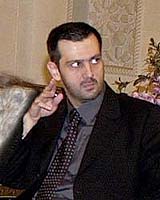
Bethlehem, West Bank (UPI) Nov 09, 2005 The U.N. report naming Bashar Assad's brother, Maher, and his brother-in-law, Asef Shawqat, as potential suspects in the assassination of Lebanon's former Prime Minister Rafik Hariri has placed renewed weight on Syria's president. Observers agree he now needs to make a "Sophie's Choice" decision. The situation is further complicated by the fact the president's two relatives are no ordinary relatives: Maher is the head of the palace guard, an elite regiment of highly trained Praetorian Guard whose job is to protect the ruling family. It is unlikely the Republican Guard would turn against its leader, Maher. Asef Shawkat is also a heavyweight in his own right; he is the chief of Syrian military intelligence, meaning he probably knows more about what is going on in the country than any other person. Detlev Mehlis, the U.N. inspector, meanwhile, is back in Lebanon retrenched in Monteverde, a posh Beirut suburb, armed with a new U.N. resolution and the support of the Security Council asking the Syrian government to allow the two high-ranking officials to travel to Beirut for questioning. In the second round of his investigation, Mehlis is having suspects brought to him, rather than he going to them. Middle East analysts say the Syrian president has two possible avenues to choose from: the "Moammar Gadhafi" or the "Saddam Hussein" options. Here is how they break down. The Gadhafi option is named for the Libyan leader who for the longest time was regarded as the blackest of sheep among Middle Eastern leader who figured on the U.S. slate of most unfriendly dictators. In recent months, Gadhafi veered from one end of the spectrum to the other since he allegedly changed policies. Gadhafi claims to have reneged on his nuclear ambitions and dropped his support of terrorism. He has handed the U.S. government whatever weapons of mass destruction equipment and/or arsenal he had, and has since become the darling child of the Bush administration. Since then many U.S. lawmakers -- senators and congressmen -- have flocked to Libya. Many came to pat Gadhafi on the back, have their picture taken with the Libyan strongman and introduce American businessmen to Moammar's son, Seif al-Islam. Seif is reported to have convinced his father to turn his back on the old ways; to abandon the support of terrorism; to give up trying to acquire and/or develop weapons of mass destruction; and to join the capitalist world. Seif wants to acquire concessions from big American corporations and start raking in more dollars. Libyan exiles claim Gadhafi has not changed his domestic policies and hundreds of political opponents continue to waste in Libyan jails. But that's another story. The Saddam option is far more unpleasant for everyone involved. It would mean a forced change of regime in Damascus. Given the way things are going in Iraq, it is highly unlikely that U.S. troops would invade Syria. A more realistic scenario would see the U.S. administration support Syrian opposition forces operating inside as well as outside the country. A coup by a coalition of opposition parties is not to be ruled out, several analysts say. This may explain the disinformation campaign against the opposition undertaken by Damascus, according to Syrian dissidents. Bashar's choices, therefore, are: Give up his relatives to the U.N. commission, by no means an easy choice. Doing so, observers say, would start to unravel the Alawite-controlled Syrian Baath Party, and ultimately weaken the president. Such a move would also bring upon Bashar the wrath of his sister, Bushra, Asef's wife, and a power to be reckoned with. Or, Bashar could remain steadfast and suffer the effects of the "Saddam option." Middle East analysts believe rather than a dilemma, Bashar should grab the bull by the horns and convince the United States to help him get rid of officials who have stood in his way and in the way of reforms. If Bashar opts for the Gadhafi options, analysts say, he could consolidate his power while keeping stability in the country. The dangers of drastic change in Syria runs the risk of bringing unknown forces to power, such as the Muslim brotherhood, whom even Kamal al-Labwani, a liberal democrat, has recently come out in support of, prompting fears of his arrest upon his expected return to Damascus in the next day or two. Both Israeli and Turkish diplomats, whose countries share borders with Syria, have expressed concern over dealing with unknown entities in Syria. Much as Israelis distrust the current regime in Damascus, they would rather deal with what they know than what they do not know. However Israeli leaders may soon change their minds when they realize Damascus is trying to drum up support in the Arab world by trying to pin Hariri's slaying on Israel, say Syrian dissidents. This is why Syria is conducting its own investigation into the assassination of the former Lebanese prime minister, explains Farid Ghadry, a Syrian opposition figure based in Washington. "It is a sign of desperation," says Ghadry. "They are in disarray." Community Email This Article Comment On This Article Related Links SpaceDaily Search SpaceDaily Subscribe To SpaceDaily Express The Long War - Doctrine and Application
 Bush Tries To Save Patriot Act
 Washington (UPI) Dec 19, 2005
It has been a weekend of unprecedented reactive political activity - it might even occur to some to call it panic - by the White House. |
|
|

| The content herein, unless otherwise known to be public domain, are Copyright 1995-2006 - SpaceDaily.AFP and UPI Wire Stories are copyright Agence France-Presse and United Press International. ESA PortalReports are copyright European Space Agency. All NASA sourced material is public domain. Additionalcopyrights may apply in whole or part to other bona fide parties. Advertising does not imply endorsement,agreement or approval of any opinions, statements or information provided by SpaceDaily on any Web page published or hosted by SpaceDaily. Privacy Statement |