|
 |
 |
 |
 |
 |
 |
 |
 |

 |
Plate Tectonics May Take A Break
Washington DC (SPX) Jan 04, 2008 Plate tectonics, the geologic process responsible for creating the Earth's continents, mountain ranges, and ocean basins, may be an on-again, off-again affair. Scientists have assumed that the shifting of crustal plates has been slow but continuous over most of the Earth's history, but a new study from researchers at the Carnegie Institution suggests that plate tectonics may have ground to a halt at least once in our planet's history-and may do so again. A key aspect of plate tectonic theory is that on geologic time scales ocean basins are transient features, opening and closing as plates shift. Basins are consumed by a process called subduction, where oceanic plates descend into the Earth's mantle. Subduction zones are the sites of oceanic trenches, high earthquake activity, and most of the world's major volcanoes. Writing in the January 4 issue of Science, Paul Silver of the Carnegie Institution's Department of Terrestrial Magnetism and former postdoctoral fellow Mark Behn (now at Woods Hole Oceanographic Institution) point out that most of today's subduction zones are located in the Pacific Ocean basin. If the Pacific basin were to close, as it is predicted to do about in 350 million years when the westward-moving Americas collide with Eurasia, then most of the planet's subduction zones would disappear with it. This would effectively stop plate tectonics unless new subduction zones start up, but subduction initiation is poorly understood. "The collision of India and Africa with Eurasia between 30 and 50 million years ago closed an ocean basin known as Tethys," says Silver. "But no new subduction zones have initiated south of either India or Africa to compensate for the loss of subduction by this ocean closure." Silver and Behn also present geochemical evidence from ancient igneous rocks indicating that around one billion years ago there was a lull in the type of volcanic activity normally associated with subduction. This idea fits with other geologic evidence for the closure of a Pacific-type ocean basin at that time, welding the continents into a single "supercontinent" (known to geologists as Rodinia) and possibly snuffing out subduction for a while. Rodinia eventually split apart when subduction and plate tectonics resumed. Plate tectonics is driven by heat flowing from the Earth's interior, and a stoppage would slow the rate of the Earth's cooling, just as clamping a lid on a soup pot would slow the soup's cooling. By periodically clamping the lid on heat flow, intermittent plate tectonics may explain why the Earth has lost heat slower than current models predict. And the buildup of heat beneath stagnant plates may explain the occurrence of certain igneous rocks in the middle of continents away from their normal locations in subduction zones. "If plate tectonics indeed starts and stops, then continental evolution must be viewed in an entirely new light, since it dramatically broadens the range of possible evolutionary scenarios," says Silver. Community Email This Article Comment On This Article Related Links Carnegie Institution Tectonic Science and News
 Soft, green rock plays role in earthquakes: study
 Washington (AFP) Dec 20, 2007
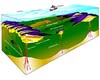
A dark green, unusually soft layer of rock known as serpentine, which coats tectonic plates, plays a key role in the emergence of powerful earthquakes, a US-French study said Thursday. |
|
|

| The content herein, unless otherwise known to be public domain, are Copyright 1995-2007 - SpaceDaily.AFP and UPI Wire Stories are copyright Agence France-Presse and United Press International. ESA Portal Reports are copyright European Space Agency. All NASA sourced material is public domain. Additional copyrights may apply in whole or part to other bona fide parties. Advertising does not imply endorsement,agreement or approval of any opinions, statements or information provided by SpaceDaily on any Web page published or hosted by SpaceDaily. Privacy Statement |