|
 |
 |
 |
 |
 |
 |
 |
 |

 |
Planetary Society Funds Search for Potentially Dangerous Near Earth Objects
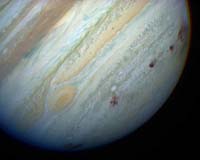
Pasadena CA (SPX) Aug 19, 2005 The Planetary Society continues to fund the search for potentially hazardous comets and asteroids that orbit close to our planet by awarding Gene Shoemaker Near Earth Object Grants to five researchers around the world. "Catastrophic impacts happen in our solar system," said Planetary Society Director of Projects Bruce Betts. "It may be a small probability threat, but the consequences are so dire we need to invest the time and money to determine which - if any - objects pose a threat." NEOs have collided with Earth in the past, violently releasing enormous amounts of energy. Many scientists believe an impact off the north coast of Mexico's Yucatan Peninsula led to the extinction of the dinosaurs. However, the threat posed by objects hurtling through our solar system is not a relic of the past. Just 11 years ago, Earth watched the bombardment of another planet when Comet shoemaker-Levy 9 impacted Jupiter. Earth travels through a swarm of near-Earth objects (NEOs) - comets and asteroids - of various sizes and orbits, the impacts of which have shaped the evolution of all planets in our solar system. Scientists have only recently begun to understand the significant contribution NEOs have made to the evolution of Earth and to life on our planet. The projects of this year's grant recipients are varied. Birtwhistle will enhance the ongoing NEO astrometric follow-up program at the Great Shefford Observatory by upgrading an existing CCD camera. Mayer and Higgins will both purchase new SBIG CCD cameras with a large pixel array and extremely short readout time. Masi plans to repair and upgrade a 0.8-meter telescope used for photometric observations of NEOs. Ashley's grant will enable him to purchase data storage equipment and an Internet server to be used as an integral part of its Asteroid Discovery Station (ADS) education project. After his death in 1997, The Planetary Society named its NEO Grant program for Gene Shoemaker. Shoemaker was a highly respected leader in the study of impact structures and an advocate for NEO discovery and tracking programs. The grants are awarded to amateur observers, observers in developing countries, and professional astronomers who, with seed funding, can greatly increase their programs' contributions to this critical research. Masi commented, "A grant named after Gene is, for me, an award for itself." Past Shoemaker grant winners have been highly productive in NEO studies. They are especially critical in the NEO world for carefully measuring positions of recently discovered NEO's. Once we know a NEO is out there, we need to learn whether or not it will hit Earth. Some of the most prolific follow-up observatories on Earth are Shoemaker grant winners, such as David Dixon at Jornada observatory in Arizona, Jane Ticha in the Czech Republic, and Roy Tucker, who alone made over 70,000 asteroid position observations in 2004. Without these types of measurements, it is impossible to determine whether the objects present a threat to Earth. Grant recipients have also discovered many previously unknown asteroids, including John Broughton's April 11, 2004 discovery of 2004 GA1. This is possibly the first amateur discovery of a potentially hazardous NEO exceeding one kilometer in diameter. Herman Mikuz of Slovenia used his grant to set up a custom made all-sky camera which continuously images the night sky from dusk to dawn and has discovered an amazing five NEOs since 2004. Since The Planetary Society's inception in 1980, the organization has donated well over a quarter million dollars to asteroid research, about half of which was awarded through 22 Shoemaker NEO grants to observers around the world. Society-funded programs have yielded several asteroid discoveries. Shoemaker NEO grant money has been used for everything from upgrading equipment to purchasing CCD cameras to paying the salaries of graduate students involved in observing programs. Nearly 70% of the estimated total number of one-kilometer or larger objects that cross Earth's orbit have been discovered. Government support for searches and follow-up programs remains modest so programs like The Planetary Society's Gene Shoemaker NEO grants fill a vital niche. Funding for the Gene Shoemaker NEO Grant program comes from The Planetary Society's members, whose voluntary dues and donations permit targeted support of research and development programs in a number of areas. An international advisory group recommends candidates to receive the grant awards. The advisory group includes Planetary Society NEO grant coordinator Daniel D. Durda, Southwest Research Institute, Alan Harris, Space Science Institute; Brian Marsden, Smithsonian Astrophysical Observatory; Petr Pravec, Ondrejov Observatory, Czech Republic; and Duncan Steel, Ball Aerospace - Australia. Community Email This Article Comment On This Article Related Links SpaceDaily Search SpaceDaily Subscribe To SpaceDaily Express Asteroid and Comet Mission News, Science and Technology
 NASA'S Spitzer Finds Possible Comet Dust Around Dead Star
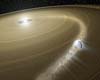 Pasadena CA (SPX) Jan 12, 2006
NASA's Spitzer Space Telescope has spotted what may be comet dust sprinkled around the white dwarf star G29-38, which died approximately 500 million years ago. |
|
|

| The content herein, unless otherwise known to be public domain, are Copyright 1995-2006 - SpaceDaily.AFP and UPI Wire Stories are copyright Agence France-Presse and United Press International. ESA PortalReports are copyright European Space Agency. All NASA sourced material is public domain. Additionalcopyrights may apply in whole or part to other bona fide parties. Advertising does not imply endorsement,agreement or approval of any opinions, statements or information provided by SpaceDaily on any Web page published or hosted by SpaceDaily. Privacy Statement |