
 |
 |
 |
 |
 |
 |
 |
 |
 |

 |
Planetary Society Calls For Vigorous Mars exploration Program
Washington - December 18, 1998 - The Mars Climate Orbiter was successfully launched last week and is now on its way to the Red Planet. It will reach Mars in nine and a half months and collect data on the planet's atmosphere and search for evidence of water. The vehicle will also operate as a radio relay station for a second mission, the Mars Polar Lander, as well as subsequent missions through 2004. The Mars Polar Lander is slated for launch on January 3, 1999. The Planetary Society supports a vigorous Mars exploration program and has funded an instrument -- the Mars Microphone -- which will fly aboard the upcoming Mars Polar Lander mission and record sounds from the surface of another planet for the first time. First Landing on Mars' Frozen South Pole The Mars Polar Lander is the third mission in NASA's Mars Surveyor Program, a decade-long effort to study the planet's geological and climatological history. The lander will be the first probe to explore the planet's polar region area (the South pole) which may contain evidence of the planet's climate history preserved in the permanently frozen terrain. The Mars Polar Lander will touch down near the edge of the south polar cap to collect weather data over a three-month period, to learn about seasonal changes by digging trenches with a robotic arm, and to search for frozen water beneath the surface. The mission will provide important clues to understanding the planet's climate history and potential to harbor life. In December of 1999 (late Spring on Mars), the lander will reach the Red Planet and directly enter the atmosphere, deploy a parachute, then fire rockets and soft land on the surface. The precise site will not be finalized until next June, after data has been analyzed from the Mars Global Surveyor, which now is imaging the planet and will soon begin its mapping mission. That orbiter has a high resolution camera that can distinguish objects as small as two to three meters, enabling the mission team to select an interesting and relatively safe landing site. Robotic Arm Tops List of Instruments Evidence suggests that Mars, three billion years ago, was warmer with a thick atmosphere and flowing surface water. Today, the planet is dry and cold with a thin atmosphere. Scientists are seeking to find out what happened to the water, which is critical to the question of life. Water may still be present below the surface. On Earth, microbes, called extremophiles, live miles below the ground. Scientists speculate that similar life may have existed - or continues to exits - in the subsurface of Mars. The Mars Polar Lander is equipped with a powerful, six-foot, robotic arm to dig trenches and deposit soil samples in miniature ovens that are designed to detect water and analyze gases. A tiny camera on the robotic arm will be used to take close-up pictures of the trenched areas so scientists can view the layering (if any) in the soil to learn about the planet's geological and climatological history. The camera will also take close-up images of surface features. On the elbow of the robotic arm is a sensor to record temperatures. The suite of lander instruments include:
And finally, over 932,000 names were collected earlier this year and will be carried on the Mars Polar Lander. New Millenium Experiments As the Mars Polar Lander approaches the upper atmosphere, two small probes (4.5 pounds each) will detach, fall through the thin air, and penetrate the ground, burrowing six feet into the soil. The microprobes have sensors to detect water ice and will measure soil temperatures and monitor weather conditions for two days. The probes are part of NASA's New Millennium Program, which develops and validates advanced technologies for future space missions. Mars 98 Reports From Spacer.Com Mission Links
Future Missions
Areography
Pathfinder
Surveyor
Email This Article Comment On This Article Related Links Space
 Satellite Launch To Boost DTH In India
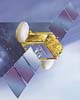 Calcutta, India (SPX) Dec 28, 2005
The successful launch Thursday of India's heaviest satellite from spaceport of Kourou in French Guyana may have boosted the country's space research efforts to yet another level, but it has also lifted the spirits of at least three Direct-To-Home televisions broadcasters, one of which has been waiting for years to launch its services in India. |
|
|

|
|
|
|
|
|
|
|
|
|
|
|
| The content herein, unless otherwise known to be public domain, are Copyright 1995-2006 - SpaceDaily.AFP and UPI Wire Stories are copyright Agence France-Presse and United Press International. ESA PortalReports are copyright European Space Agency. All NASA sourced material is public domain. Additionalcopyrights may apply in whole or part to other bona fide parties. Advertising does not imply endorsement,agreement or approval of any opinions, statements or information provided by SpaceDaily on any Web page published or hosted by SpaceDaily. Privacy Statement |

