
 |
 |
 |
 |
 |
 |
 |
 |
 |

 |

Paris (AFP) Jan 11, 2011 Astronomers exulted on Tuesday at the first results from Europe's billion-dollar Planck space telescope, designed to probe the microwave secrets of the "Big Bang" 14 billion years ago. Launched in May 2009, Planck has carried out three complete scans of the Universe, yielding a catalogue of 15,000 new celestial objects, including 30 galaxy clusters, they reported at a conference in Paris. The data is a "treasure trove" that will be exploited for years to come, said Jan Tauber, a project scientist at the European Space Agency (ESA). "For the Planck community, this is a big day," he said. "It's hard for us to transmit the excitement that we feel." Planck, deployed in orbit 1.5 million kilometres (937,000 miles) from Earth, is chiefly designed to pick up tiny variations in temperature in microwave energy that was released after the Big Bang that created the Universe. The probe into this so-called Cosmic Microwave Background (CMB) is still underway, and the outcome will probably be published in 2013. One of the tasks that the telescope has overcome, though, is to remove a "fog" of microwave emissions -- a diffuse glow that for decades has distorted the view of dusty regions of deep space. Data collected by Planck confirm the theory that the "fog" comes from nano-scale grains that are set spinning at several tens of billions of times a second, by collision either with fast-moving atoms or packets of ultraviolet light. Scientists should now be able to filter out this signal, enabling them to concentrate on genuine CMB traces in Planck's rich reams of data. The Paris conference was briefed on 25 papers, detailing the data finds from Planck. They have been submitted to a specialist journal, Astronomy and Astrophysicists, for publication. "These new results are all vital pieces of a jigsaw that could give us a full picture of the evolution of both our own cosmic backyard -- the Milky Way galaxy that we live in -- as well as the early history of the whole Universe," said David Parker, director of space science at the UK Space Agency. Planck's big tool is a 1.5-metre (4.8-feet) -long telescope that focuses radiation onto two array of detectors which are cooled to nearly absolute zero. The telescope had a mission duration of 15 months, but its operations have already been extended by two years. It is named after the 20th-century German physicist Max Planck, who founded the quantum theory.
Share This Article With Planet Earth
Related Links Understanding Time and Space

 Fahrenheit -459: Neutron Stars And String Theory In A Lab
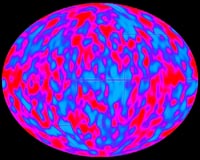
Durham NC (SPX) Dec 10, 2010 Using lasers to contain some ultra-chilled atoms, a team of scientists has measured the viscosity or stickiness of a gas often considered to be the sixth state of matter. The measurements verify that this gas can be used as a "scale model" of exotic matter, such as super-high temperature superconductors, the nuclear matter of neutron stars, and even the state of matter created microseconds ... read more |
|
|
| The content herein, unless otherwise known to be public domain, are Copyright 1995-2010 - SpaceDaily. AFP and UPI Wire Stories are copyright Agence France-Presse and United Press International. ESA Portal Reports are copyright European Space Agency. All NASA sourced material is public domain. Additional copyrights may apply in whole or part to other bona fide parties. Advertising does not imply endorsement,agreement or approval of any opinions, statements or information provided by SpaceDaily on any Web page published or hosted by SpaceDaily. Privacy Statement |


 del.icio.us
 Digg
Digg Reddit
 YahooMyWeb
 Google
 Facebook


