
 |
 |
 |
 |
 |
 |
 |
 |
 |

 |
Picosat Technology Gets Serious
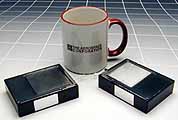
El Segundo - October 11, 1999 - The picosat launch will take place from the Spaceport Systems International (SSI) Commercial Spaceport at Vandenberg. It is to be the inaugural launch of the Orbital/Suborbital Program Space Launch Vehicle developed by the Air Force Space and Missile System Center's Test and Evaluation Directorate at Kirtland Air Force Base. It also is to be the first launch from the commercial spaceport. Orbital Sciences Corporation is handling launch integration for the Orbital/Suborbital Program, whose purpose is to achieve low-cost spacelift for small satellites. The program uses surplus Minuteman II solid rocket motors and upper stages derived from Orbital's Pegasus rockets. Satellite Classifications Satellites are classified according to weight. Picosats are under one kilogram (2.2 kilograms equal a pound), while nanosatellites range from 1 to 10 kilograms. Other classes are microsats, 10 to 100 kilograms; small sats, 100 to 1,000 kilograms; and standard satellites, 1,000 kilograms or more. The smallest category envisioned is the femtosat, less than one-tenth of a kilogram, a satellite that would handle very simple missions. Tethering The two orbiting picosats are to be tethered because they will communicate via micropower radios. The tether will keep them within range of each other for crosslink purposes. In addition, the tether contains thin strands of gold wire to facilitate radar tracking by U.S. Space Command. Concepts for the future involve optical communication via fiberoptic tethers and other cluster architectures for miniature satellites for which experience with tethers is useful.
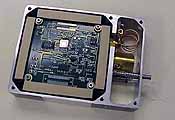
The mission represents one of several programs for systematic testing and use of MEMS in space to be designed and implemented by The Aerospace Corporation. In another program, Aerospace researchers and colleagues at other organizations are analyzing data from MEMS devices brought back from the space shuttle Columbia July 27 and are making plans for a MEMS mission to the International Space Station. Nanosatellites The picosat mission is helping to lay the groundwork for nanosatellite missions. Mass production using semiconductor technology and incorporating high-level building blocks called application-specific integrated microinstruments, or ASIMs, a description coined by Robinson, would characterize nanosatellite architecture and assembly. ASIMs comprise MEMS and related electronics subsystems used to form standalone capabilities. They can be integrated to create various types of ultrasmall instruments, components and subsystems and -- ultimately -- complete systems and miniature satellites. "The use of this technology for low-cost, reliable, integrated space systems applications is inevitable," Robinson said. Future space architectures include cooperative constellations, sparse aperture antennas, local swarms of nanosatellites, inspection and service missions, and extremely flexible launch-on-demand options, which include gun and balloon-assisted launches.
Email This Article Comment On This Article Related Links Space
 Satellite Launch To Boost DTH In India
 Calcutta, India (SPX) Dec 28, 2005
The successful launch Thursday of India's heaviest satellite from spaceport of Kourou in French Guyana may have boosted the country's space research efforts to yet another level, but it has also lifted the spirits of at least three Direct-To-Home televisions broadcasters, one of which has been waiting for years to launch its services in India. |
|
|

|
|
|
|
|
|
|
|
|
|
|
|
| The content herein, unless otherwise known to be public domain, are Copyright 1995-2006 - SpaceDaily.AFP and UPI Wire Stories are copyright Agence France-Presse and United Press International. ESA PortalReports are copyright European Space Agency. All NASA sourced material is public domain. Additionalcopyrights may apply in whole or part to other bona fide parties. Advertising does not imply endorsement,agreement or approval of any opinions, statements or information provided by SpaceDaily on any Web page published or hosted by SpaceDaily. Privacy Statement |
 Testing MEMS
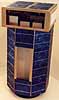 Herndon - September 13, 1999 - AeroAstro, has been awarded a contract for $150,000 by the U.S. Air Force Research Laboratory to study the tactical use of nanosatellites for military applications. AeroAstro will incorporate its new Bitsy Nanosatellite Core Module in its research for the Air Force.