
 |
 |
 |
 |
 |
 |
 |
 |
 |

 |
Phoenix Mission Conducting Extended Activities On Mars
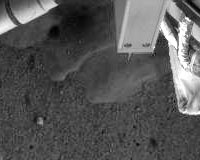
Tucson AZ (SPX) Sep 03, 2008 NASA's Phoenix Mars Lander, having completed its 90-day primary mission, is continuing its science collection activities. Science and engineering teams are looking forward to at least another month of Martian exploration. Due to the spacecraft's sufficient power and experiment capacity, NASA announced on July 31 that the mission would continue operations through Sept. 30. Once the lander finishes collecting science data, the mission teams will continue the analysis of the measurements and observations. "We have been successful beyond my wildest dreams, and we're not done yet learning from Mars about its secrets," said Peter Smith, Phoenix principal investigator from The University of Arizona, Tucson. "We are still working to understand the properties and the history of the ice at our landing site on the northern plains of Mars. While the sun has begun to dip below the horizon, we still have power to continue our observations and experiments. And we're hoping to see a gradual change in the Martian weather in the next few weeks," he said. Among the critical questions the Phoenix science team is trying to answer is whether the northern region of Mars could have been a habitable zone. Phoenix has already confirmed the presence of water ice, determined the soil is alkaline and identified magnesium, sodium, potassium, chloride and perchlorate in the soil. Chemical analyses continue even as Phoenix's robotic arm reaches out for more samples to sniff and taste. "It's been gratifying to be able to share the excitement of our exploration with the public through the thousands upon thousands of images that our cameras have taken. They have been available to the public on our web site as soon as they are received on Earth," Smith said. Phoenix's Surface Stereo Imager, Robotic Arm Camera and microscope have returned more than 20,000 pictures since landing day, May 25. The mission's meteorological instruments have made daily atmospheric readings and have watched as the pressure decreases, signaling a change in the season. At least one ice water cloud has been observed and consistent wind patterns have been recorded over the landing site. The team is currently working to diagnose an intermittent interference that has become apparent in the path for gases generated by heating a soil sample in the Thermal and Evolved-Gas Analyzer to reach the instrument's mass spectrometer. Vapors from all samples baked to high temperatures have reached the mass spectrometer so far, however data has shown that the gas flow has been erratic, which is puzzling the scientists. Meanwhile, plans call for Phoenix to widen its deepest trench, called "Stone Soup," to scoop a fresh sample of soil from that depth for analysis in the wet chemistry laboratory of the Microscopy, Electrochemistry and Conductivity Analyzer (MECA). Stone Soup measures about 18 centimeters (7 inches) deep. The first attempt to collect a sample from Stone Soup, on Aug. 26, got 2 to 3 cubic centimeters (half a teaspoon) into the scoop. This was judged to be not quite enough, so delivering a sample was deferred. In coming days the team also plans to have Phoenix test a revised method for handling a sample rich in water-ice. Two such samples earlier stuck inside the scoop. Community Email This Article Comment On This Article Share This Article With Planet Earth
Related Links Phoenix at LPL Phoenix at NASA Mars News and Information at MarsDaily.com Lunar Dreams and more
 Phoenix Mission Conducting Extended Activities On Mars
 Tucson AZ (SPX) Sep 01, 2008
NASA's Phoenix Mars Lander, having completed its 90-day primary mission, is continuing its science collection activities. Science and engineering teams are looking forward to at least another month of Martian exploration. |
|
|

| The content herein, unless otherwise known to be public domain, are Copyright 1995-2007 - SpaceDaily.AFP and UPI Wire Stories are copyright Agence France-Presse and United Press International. ESA Portal Reports are copyright European Space Agency. All NASA sourced material is public domain. Additional copyrights may apply in whole or part to other bona fide parties. Advertising does not imply endorsement,agreement or approval of any opinions, statements or information provided by SpaceDaily on any Web page published or hosted by SpaceDaily. Privacy Statement |
 del.icio.us
 Digg
Digg Reddit
 YahooMyWeb
 Google
 Facebook