
 |
 |
 |
 |
 |
 |
 |
 |
 |

 |
Phoenix Goes Quiet
Pasadena CA (SPX) Oct 31, 2008 NASA'S Phoenix Mars Lander, with its solar-electric power shrinking due to shorter daylight hours and a dust storm, did not respond to an orbiter's attempt to communicate with it Wednesday night and Thursday morning. Mission controllers judge the most likely situation to be that declining power has triggered a pre-set precautionary behavior of waking up for only about two hours per day to listen for an orbiter's hailing signal. If that is the case, the wake-sleep cycling would have begun at an unknown time when batteries became depleted. "We will be coordinating with the orbiter teams to hail Phoenix as often as feasible to catch the time when it can respond," said Phoenix Project Manager Barry Goldstein at NASA's Jet Propulsion Laboratory, Pasadena, Calif. "If we can reestablish communication, we can begin to get the spacecraft back in condition to resume science. In the best case, if weather cooperates, that would take the better part of a week." The Phoenix lander has operated at a Martian arctic site for more than two months longer than its initially planned, three-month prime mission. The sun stayed above the horizon around the clock during the prime mission, but is now below the horizon for about 7 hours each night. Engineers at JPL and at Lockheed Martin Space Systems, Denver, operate Phoenix and the two NASA orbiters used for relaying communications with the lander, Mars Reconnaissance Orbiter and Mars Odyssey. Community Email This Article Comment On This Article Share This Article With Planet Earth
Related Links Phoenix at LPL Phoenix at NASA Mars News and Information at MarsDaily.com Lunar Dreams and more
 Phoenix Enters Safe Mode
 Pasadena CA (SPX) Oct 30, 2008
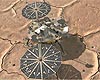
NASA'S Phoenix Mars Lander entered safe mode late yesterday in response to a low-power fault brought on by deteriorating weather conditions. While engineers anticipated that a fault could occur due to the diminishing power supply, the lander also unexpectedly switched to the "B" side of its redundant electronics and shut down one of its two batteries. |
|
|

| The content herein, unless otherwise known to be public domain, are Copyright 1995-2007 - SpaceDaily.AFP and UPI Wire Stories are copyright Agence France-Presse and United Press International. ESA Portal Reports are copyright European Space Agency. All NASA sourced material is public domain. Additional copyrights may apply in whole or part to other bona fide parties. Advertising does not imply endorsement,agreement or approval of any opinions, statements or information provided by SpaceDaily on any Web page published or hosted by SpaceDaily. Privacy Statement |

 del.icio.us
 Digg
Digg Reddit
 YahooMyWeb
 Google
 Facebook