|
 |
 |
 |
 |
 |
 |
 |
 |

 |
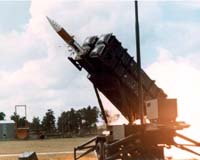
Pentagon confirms accidental Patriot launch
Washington (AFP) Oct 16, 2007 A US Patriot missile was accidentally launched in Qatar and self-destructed over an unpopulated farm area, causing no injuries, Pentagon officials said Tuesday. Lieutenant General Carter Ham, director of operations of the Joint Staff, said a Patriot missile unit at Camp As-Saliyah in Qatar was conducting a training exercise when the missile accidentally went off. "Don't know why or how the missile advertently launched, but it did," he told reporters here. "The preliminary indications are that it did as it was expected to do: it self-destructed. The debris is about three or four miles from the launch site. it's secure." Ham said the government of Qatar, US forces and the US embassy were investigating the incident. "We're very happy that nobody was injured in the incident," he said. Earlier, Pentagon spokesman Bryan Whitman said the missile landed in an unpopulated farm area. Qatar, a member of the pro-Western Gulf Cooperation Council, hosts the US army's Central Command which directed the US-led invasion of Iraq in March 2003. The Patriot is a surface-to-air missile system used by the US military and several of its allies, including Israel. The US military has two bases in Qatar, As-Sailiyah and Al-Udeid, which is located in the desert further south of the capital. Community Email This Article Comment On This Article Related Links Learn about missile defense at SpaceWar.com All about missiles at SpaceWar.com
 NKorea tests new solid-fuel missile, MP says
 Seoul (AFP) Oct 11, 2007
North Korea has successfully tested a highly mobile short-range missile which could hit targets inside South Korea with chemical or explosive warheads, a lawmaker said Thursday. |
|
|

| The content herein, unless otherwise known to be public domain, are Copyright 1995-2007 - SpaceDaily.AFP and UPI Wire Stories are copyright Agence France-Presse and United Press International. ESA Portal Reports are copyright European Space Agency. All NASA sourced material is public domain. Additional copyrights may apply in whole or part to other bona fide parties. Advertising does not imply endorsement,agreement or approval of any opinions, statements or information provided by SpaceDaily on any Web page published or hosted by SpaceDaily. Privacy Statement |