|
 |
 |
 |
 |
 |
 |
 |
 |

 |
Panel Identifies Three Options For Space Telescope Transition
Washington - Aug 15, 2003 An independent panel of astronomers identified three options for NASA to consider for planning the transition from the Hubble Space Telescope (HST) to the James Webb Space Telescope (JWST) at the start of the next decade. The panel, chaired by Prof. John Bahcall, Institute for Advanced Study, Princeton, N.J. chartered by NASA earlier this year, submitted their report to the agency this week. NASA's current plans are to extend the life of the HST to 2010 with one Space Shuttle servicing mission (SM 4) in 2005 or 2006. The plan is tentative pending the agency's return to flight process and the availability of Shuttle missions. NASA plans to eventually remove the HST from orbit and safely bring it down into the Pacific Ocean. "NASA is deeply appreciative to Prof. Bahcall and the panel for getting this thoughtful report to us ahead of schedule," said Dr. Ed Weiler, NASA's Associate Administrator for Space Science. "We have a big job to do to study the panel's findings and consider our options, and we will respond as soon as we have time to evaluate their report," Weiler said. The three options presented by the HST-JWST Transition Plan Review Panel, listed in order of priority, are:
In addition, the panel described various ways to ensure maximum science return from the HST if none, one or two Shuttle servicing missions are available. "A lot of astronomers and NASA officials were astonished, when we said our report was ready just one week after our public meeting. This was possible because we reached unanimous agreement on our conclusions very quickly; remarkable when you consider there were six independent- minded scientists on the panel. Our secret is we did our homework very thoroughly. Many people helped to educate us," Bahcall said. Community Email This Article Comment On This Article Related Links HST-JWST Transition Panel Report Hubble Space Telescope James Webb Space Telescope SpaceDaily Search SpaceDaily Subscribe To SpaceDaily Express Space Telescope News and Technology at Skynightly.com
 Carl Zeiss And Max Planck Researchers Develop Optical Technology For JWST
 Heidelberg, Germany (SPX) Dec 09, 2005
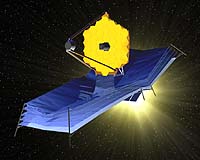
Carl Zeiss Optronics, in Oberkochen, Germany, and the Max Planck Institute for Astronomy in Heidelberg (MPIA), are developing the main fine mechanical optical technology for two instruments to be part of the James Webb Space Telescope (JWST).
--------------------------------------------------------- It's new. And it's downright terrific! Celestron's CPC Schmidt-Cassegrain telescope is the scope you've been waiting for! It offers new alignment technology, advanced engineering, and bold new design at a new, low price! In fact, Celestron's Professional Computerized (CPC) scope with revolutionary SkyAlign Alignment Technology redefines everything that amateur astronomers are looking for. It offers quick and simple alignment, GPS technology, unsurpassed optical quality, ease of use, advanced ergonomics, enhanced computerization and, most important, affordability. Want to view M-31 tonight? One button takes you there!
Shop for telescopes online at Telescopes.com! today!
|
|
|

| The content herein, unless otherwise known to be public domain, are Copyright 1995-2006 - SpaceDaily.AFP and UPI Wire Stories are copyright Agence France-Presse and United Press International. ESA PortalReports are copyright European Space Agency. All NASA sourced material is public domain. Additionalcopyrights may apply in whole or part to other bona fide parties. Advertising does not imply endorsement,agreement or approval of any opinions, statements or information provided by SpaceDaily on any Web page published or hosted by SpaceDaily. Privacy Statement |