|
 |
 |
 |
 |
 |
 |
 |
 |

 |
Pakistan Rattled By Aftershocks, Troops Struggle To Reach Remote Areas
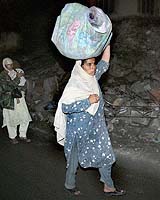
Muzaffarabad, Pakistan (AFP) Oct 13, 2005 Pakistani troops struggled Thursday to reach remote mountain villages cut off since the weekend quake, as powerful aftershocks set off panic among millions of homeless and traumatised survivors. Desperately-needed supplies were beginning to arrive in devastated northeast Pakistan but not nearly enough to feed, clothe and shelter some 2.5 million people who have been sleeping out in the cold and rain since Saturday. Stunned villagers also poured out of the mountains into the devastated cities of Pakistani Kashmir in search of aid, forced to leave behind their dead and injured in remote settlements where rescuers have not yet set foot. "We are worried for them. We're taking food and supplies with us. We can't reach them by road so we have to use helicopter," said a Pakistani army colonel in charge of one of the units moving higher into the mountains. United Nations Emergency Relief Coordinator Jan Egeland flew in Thursday to see the aftermath of the earthquake at first hand. "This is a desperate situation. As you can see we are making progress in the more populated areas but it is so hard to reach the others," he said after a helicopter tour of the disaster zone. "We're still racing against the clock and we need to get more helicopters, more water, more tents and more money." But he rejected complaints from destitute and injured survivors that the response by UN and Pakistani agencies was too slow. "It is not slow. The first three or four days there weren't even (open) roads here," he said. "In the pipeline we have 10,000 tents and 100,000 blankets but it takes time to go to these areas." Hussein Gezairy, who heads the World Health Organization's (WHO) regional office that covers Pakistan, said it was harder to reach affected areas than had been the case after December's Asian tsunami disaster. "In the tsunami 1.5 million people were made homeless, but in this case we expect more than 2.5 million to be homeless," he said. "During the tsunami it was possible to have some ships, and in this case only helicopters can reach the disaster areas. But they cannot transport a large number people and equipment. It is much, much more difficult." Pakistan raised the official death toll to more than 25,000, with some 63,000 injured, but aid workers believe up to 40,000 have been killed. On the Indian side of divided Kashmir, the toll has hit 1,329 and more than 40,000 homes have been razed. The hardship has been compounded by a series of aftershocks, including a powerful tremor overnight which triggered panic on both sides of the heavily militarised Line of Control that divides Kashmir. "It shook us out of our beds and we fled outside in panic," school teacher Muzaffar Wani said in Srinagar, the capital of Indian Kashmir. In Islamabad, thousands of jittery residents rushed out of their houses and began reciting verses from the Muslim holy book, the Koran, and later in the day rumours of another imminent earthquake sent them out on the streets again. Many buildings still standing after Saturday's monster quake have been left in a perilous condition, leading to fears that further tremors could bring teetering walls and roofs tumbling down. As hope faded that more survivors would be dug out of the ruins, heavy earth-moving equipment began clearing the rubble in some areas Thursday. Attention was turning to the needs of survivors, many of whom risk being cut off with no food, shelter or supplies as the harsh Himalayan winter sets in, British charity Oxfam said. "The winter is coming and fast. Within three weeks thousands of people will have been cut off," said Shaista Aziz, an Oxfam worker in Pakistani Kashmir, where snow is already settling on mountain peaks. WHO, the UN's health body, warned that measles, malaria and other diseases are likely to erupt among hundreds of thousands of survivors living in crowded and dirty conditions unless supplies of clean water are urgently delivered. "Water is especially critical. People need it for basic survival and to reduce the risk of infectious disease. Unsafe water will lead to epidemics," it said. With hospitals destroyed across the disater zone, the WHO said many people with serious injuries and festering wounds were going untreated and that the number of doctors needed to be doubled or tripled. Wounded survivors were seeking treatment at makeshift hospitals like the squalid clinic set up at a stadium in Muzaffarabad. "We're simply swamped. There's enough medicine for basic treatment but not enough supplies or doctors," said surgeon Sohail Muzammil as a never-ending stream of patients arrived. "There are only three operating tables -- sometimes we put two children on the same table, the others are treated on the ground. There are too many wounded." Qasan Deen, 65, walked for hours from the distant village of Konka to seek treatment for his granddaughter Sumera, who like thousands of children was crushed under the walls of her school. "In Konka, there were 35 houses and they were all destroyed. The entire family is dead. There are bodies in the debris and we haven't gotten any help," he said, holding the little girl tenderly in his arms. Community Email This Article Comment On This Article Related Links SpaceDaily Search SpaceDaily Subscribe To SpaceDaily Express Tectonic Science and News
 Japan Hopes To Predict Big One With Journey To Center Of Earth
 Yokohama, Japan (AFP) Dec 15, 2005
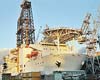
An ambitious Japanese-led project to dig deeper into the Earth's surface than ever before will be a breakthrough in detecting earthquakes including Tokyo's dreaded "Big One," officials said Thursday. |
|
|

| The content herein, unless otherwise known to be public domain, are Copyright 1995-2006 - SpaceDaily.AFP and UPI Wire Stories are copyright Agence France-Presse and United Press International. ESA PortalReports are copyright European Space Agency. All NASA sourced material is public domain. Additionalcopyrights may apply in whole or part to other bona fide parties. Advertising does not imply endorsement,agreement or approval of any opinions, statements or information provided by SpaceDaily on any Web page published or hosted by SpaceDaily. Privacy Statement |