
 |
 |
 |
 |
 |
 |
 |
 |
 |

 |
Outside View: U.S. defense bulimia
Arlington, Va. (UPI) Jul 15, 2008 Despite being the land of plenty -- even excess -- in recent years, the United States has experienced an epidemic of eating disorders. One of these, bulimia, a condition reported to have afflicted Diana, the late princess of Wales, is characterized by alternating cycles of binging on food followed by purging. In addition to the obvious psychological effects, bulimia can inflict tremendous damage on the sufferer's body and metabolism. Defense acquisition historically has suffered from a similar problem. Despite the availability of tremendous resources, acquisition programs go through repeated boom-and-bust cycles very similar in character and effect to bulimia's binge and purge process. Even when defense budgets are rising and resources are plentiful, the fear of the next inevitable downturn in defense spending can lead some programs to spend every dollar they get, often inefficiently. When defense spending is cut, even well-managed programs can find themselves short of funds, often resulting in reductions to planned buys, lengthened acquisition timelines and, ironically, higher overall costs. The U.S. Congress's habit in recent years of failing to pass defense budgets in a timely manner has further exacerbated the problem by forcing the U.S. Department of Defense to take money from some programs, often very successful ones, in order to pay higher priority bills. Curing this condition, either in its personal or bureaucratic forms, requires the creation and enforcement of regularized and predictable patterns of behavior. For U.S. defense acquisition, this means funding stability. If acquisition planners had a reasonable idea of the resources they had from year to year, they could create long-range acquisition plans, thereby reducing inefficiency and waste and lowering the costs of procurement. One way of providing funding stability is by placing a floor under U.S. defense spending. A number of recent studies have suggested the equivalent of approximately 4 percent of the United States' gross domestic product would be a reasonable and sustainable base with which to ensure the maintenance of our current military capabilities. Another way of providing stability and predictability is through multiyear procurement contracts. Such contracts commit the Department of Defense to acquire a certain number of platforms or systems over a number of years. American defense contractors can use this predictable funding base to buy materials and components at more economical rates, thereby reducing the cost to the U.S. government. The next administration, whether it is led by a President Barack Obama or a President John McCain, needs to break with the historic, dysfunctional "binge and purge" cycle in defense spending. In light of all the other financial crises that are sure to confront the new president, he would be wise to take the issue of future defense budgets off the table by establishing a stable basis for funding. (Daniel Goure is vice president of the Lexington Institute in Arlington, Va., a think tank that specializes in defense issues.) (United Press International's "Outside View" commentaries are written by outside contributors who specialize in a variety of important issues. The views expressed do not necessarily reflect those of United Press International. In the interests of creating an open forum, original submissions are invited.) Community Email This Article Comment On This Article Share This Article With Planet Earth
Related Links The Military Industrial Complex at SpaceWar.com Learn about the Superpowers of the 21st Century at SpaceWar.com
 The Air Tanker Wars Continue Part Three
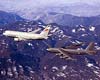 Washington (UPI) Jul 14, 2008
 U.S. Defense Secretary Robert Gates' announcement last week that the award of a gigantic $35 billion contract for 179 new U.S. Air Force jet tankers to EADS and Northrop Grumman has been nullified and will be re-competed is bad news for Sen. Barack Obama's presidential election campaign. But it could make trans-Atlantic life a lot easier for Obama if he wins the presidency in November. |
|
|

| The content herein, unless otherwise known to be public domain, are Copyright 1995-2007 - SpaceDaily.AFP and UPI Wire Stories are copyright Agence France-Presse and United Press International. ESA Portal Reports are copyright European Space Agency. All NASA sourced material is public domain. Additional copyrights may apply in whole or part to other bona fide parties. Advertising does not imply endorsement,agreement or approval of any opinions, statements or information provided by SpaceDaily on any Web page published or hosted by SpaceDaily. Privacy Statement |

 del.icio.us
 Digg
Digg Reddit
 YahooMyWeb
 Google
 Facebook