
 |
 |
 |
 |
 |
 |
 |
 |
 |

 |
Outside View: Russian arms plans -- Part 1
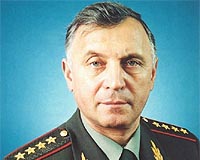
Moscow (UPI) Jul 2, 2008 Military-technical cooperation with the West and with other nations: does Russia need it? Although sounding rhetorical, the question highlights one of the current weaknesses of Russia's defense industry. In mid-June, four-star General of the Army Nikolai Makarov, the newly appointed chief of the General Staff of Russia, speaking at the Eurosatory 2008 defense exhibition in Paris, said, "Starting in 2011 we will begin formulating a new armament program through 2020." The program, Makarov said, "should coordinate the development of all Russian weapons and equipment." Makarov defined his mission at the Paris exhibition as "watching the direction of the world, minimizing possible mistakes and following the trends of the 2020s and 2030s." The world -- and the 27 nations of the European Union in particular -- is moving toward international cooperation and abandoning the practice of each state developing and manufacturing its own weapon systems. The Organization for Joint Armament Cooperation, or OCCAR, has served this purpose for almost 10 years in Europe. This cooperation has enabled a united Europe, early in the millennium, to expand to a new purchasing system. For example, a contract to buy 196 A-400M military transport planes for eight countries signed in Brussels in December 2001 was completed between Airbus Military and OCCAR, rather than between the manufacturer and each separate country. Space is another arena for cooperation. The European Space Agency coordinates the space efforts of all European nations involved in the program. It is no secret that Russia's defense industry relies heavily on production facilities in Ukraine. Engines for strategic and converted launch vehicles are produced, for example, in Dneprepetrovsk, and there have been few complaints about their performance. But NATO-dominated European military cooperation is one thing, and cooperation between Russian and Ukrainian defense plants is another thing. Today's reality is that most of Russia's defense products are manufactured abroad. In mid-June, Russia's prime minister and former president, Vladimir Putin, strongly urged an end to dependence on Ukrainian production of aero and rocket engines. He said he wanted engines for the Kh-35, Kh-55 and Kh-59M strategic air-launched cruise missiles currently produced in Ukraine to be manufactured in Russia. Putin's motives on the issue are easy to understand. Ukraine's uncertain policy, its possible future membership of the U.S.-led North Atlantic Treaty Organization and its anti-Russian rhetoric appear to force Russian leadership to seek other options. However, it may be that Putin's sense of urgency about severing the Kremlin's longstanding arms production ties with Ukraine are misplaced and that time, after all, may be working on Russia's side on the issue. Next: Why Russia still needs strategic ballistic missile production cooperation with Ukraine (Andrei Kislyakov is a political commentator for RIA Novosti. This article is reprinted by permission of RIA Novosti. The opinions expressed in this article are the author's and do not necessarily represent those of RIA Novosti.) (United Press International's "Outside View" commentaries are written by outside contributors who specialize in a variety of important issues. The views expressed do not necessarily reflect those of United Press International. In the interests of creating an open forum, original submissions are invited.) Community Email This Article Comment On This Article Share This Article With Planet Earth
Related Links The Military Industrial Complex at SpaceWar.com Learn about the Superpowers of the 21st Century at SpaceWar.com
 Thompson Files: USAF tanker choice fiasco
 Arlington, Va. (UPI) Jul 1, 2008
 The Government Accountability Office's stinging rebuke of the U.S. Air Force tanker competition published in June was so sweeping that some observers say a new award may not be made for years. |
|
|

| The content herein, unless otherwise known to be public domain, are Copyright 1995-2007 - SpaceDaily.AFP and UPI Wire Stories are copyright Agence France-Presse and United Press International. ESA Portal Reports are copyright European Space Agency. All NASA sourced material is public domain. Additional copyrights may apply in whole or part to other bona fide parties. Advertising does not imply endorsement,agreement or approval of any opinions, statements or information provided by SpaceDaily on any Web page published or hosted by SpaceDaily. Privacy Statement |
 del.icio.us
 Digg
Digg Reddit
 YahooMyWeb
 Google
 Facebook