|
 |
 |
 |
 |
 |
 |
 |
 |

 |
Outside View: Russian S-300s for Iran
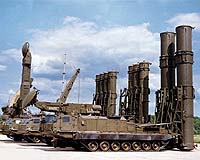
Moscow (UPI) Jan 3, 2007 The West appears amazed to see the Russian-Iranian strategic partnership surviving and even strengthening. This partnership is quite logical, but the West turned its attention to it only with supplies of Russian long-range surface-to-air S-300 missiles. Due to start in January, these supplies were agreed upon a long time ago. Judging by the response of the media, the West is panicky to see Russia stick to the promise. The Guardian warns that modernized Russian air defense missile systems can hit U.S. and Israeli war aircraft, and S-300 are even better than Patriots at intercepting cruise missiles and intermediate-range ballistic missiles. But then, why would Iran need such weapons? Will they come on friendly visits or what? The New York Times regards the upcoming deal as another arbitrary Russian step and reproaches President Bush for his tolerance as Russia starts fuel exports to the Bushehr nuclear plant. The newspaper could have regarded the fuel and missile supplies as an asymmetrical response to the American ABM in Europe. The same logic could also apply to the Kosovo issue. Besides, the United States is also capable of arbitrary moves. In 2002 it slammed the door on the ABM Treaty without giving any thought to Russia's reaction. Now, it is spreading its anti-missile defense to Europe despite the problems it would cause for Russia and, for that matter, for Europe if Russia hit back. But then, why is Moscow to believe Washington that the European ABM system is targeted at Iran and not Russia? Is the United States any better than Iran, which is trying to convince the world that it will have no nuclear weapons because they go against Muslim precepts? With a recent shift of policy toward Iran, Russia is now determined to comply with its pledges on the Iranian nuclear program, though within limits set by the International Atomic Energy Agency. Whatever crisis may befall Iran, Russia stands to lose -- for instance, if the U.N. Security Council toughens its sanctions and the United States and the European Union wind down partnership with Iran. The world went through a similar situation when Russia did much to stop the isolation of Iran. No better for Russia would be a limited U.S. missile strike on Iran, which would overthrow its president. Things would be downright disastrous if America unleashed a total war. Russia would not gain, either, with a secret U.S.-Iranian agreement -- which appears the least probable option of all. Russia would also lose if Iran obtained nuclear arms. That would be a danger no smaller than the American ABM in Europe. There is only one wise thing Russia can do: join efforts with its partners to settle the Iranian problem without radical measures. This is what Moscow is trying to do now -- suffice it to say that fuel supplies to Bushehr have been coordinated with the White House. Now, is it possible at all to settle the Iranian problem without acting tough? Is Moscow ready to do so? And is Iran gambling on its contacts with Russia? There are no clear answers to those burning questions, and it is hard to say whether S-300s have any bearing on them. Be that as it may, Russia will certainly bring its missiles to Iran. (Pyotr Goncharov is a political commentator for RIA Novosti. This article is reprinted by permission of RIA Novosti. The opinions expressed in this article are the author's and do not necessarily represent those of RIA Novosti.) (United Press International's "Outside View" commentaries are written by outside contributors who specialize in a variety of important issues. The views expressed do not necessarily reflect those of United Press International. In the interests of creating an open forum, original submissions are invited.) Community Email This Article Comment On This Article Related Links Learn about missile defense at SpaceWar.com All about missiles at SpaceWar.com
 Taiwan president raps China over missile build-up
 Taipei (AFP) Jan 1, 2008
Taiwan's president Tuesday accused China of attempting to change the status quo in the Strait by stockpiling more than 1,000 missiles, stepping up the rhetoric against Beijing. |
|
|

| The content herein, unless otherwise known to be public domain, are Copyright 1995-2007 - SpaceDaily.AFP and UPI Wire Stories are copyright Agence France-Presse and United Press International. ESA Portal Reports are copyright European Space Agency. All NASA sourced material is public domain. Additional copyrights may apply in whole or part to other bona fide parties. Advertising does not imply endorsement,agreement or approval of any opinions, statements or information provided by SpaceDaily on any Web page published or hosted by SpaceDaily. Privacy Statement |