
 |
 |
 |
 |
 |
 |
 |
 |
 |

 |
Outside View: Iraq realities -- Part 1
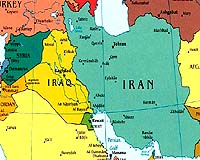
Washington (UPI) Jun 27, 2008 In his famous work "The Peloponnesian Wars," written more than 2,000 years ago, the classical Greek historian Thucydides argued that states go to war for one or all of three reasons. States fight against threats. States fight for profit. Or, states fight for honor. All three reasons were used to justify the United States' military intervention in Iraq. Of the three, however, only honor remained when it became obvious in the summer of 2003 that Iraqi dictator Saddam Hussein's capacity to produce weapons of mass destruction was limited to restarting Iraq's weapons of mass destruction programs if and when sanctions were lifted. What no one in the United States or Iraq knew then was just what it would take to satisfy America's honor. Today, Americans have a better idea of how great that cost is going to be. U.S. President George W. Bush and his generals turned a limited military intervention to remove the unpopular leadership of a weak, incapable, organized crime state into a tragically destructive war of occupation waged against Iraq's Sunni Arab population. In a long campaign that cost the U.S. Army and the U.S. Marine Corps 3,500 battle casualties, the generals applied the al-Qaida brand name to any Arab opposed to the U.S. military occupation -- killing, wounding or incarcerating hundreds of thousands of Sunni Arabs, while driving an additional 3 million Arabs, most of whom are Sunni, out of Iraq. Conditioned by the U.S. media to ignore Arab losses, for the first few years American public opinion did not constrain the president or his generals as they jointly pursued the destruction of Sunni Arab strength in Iraq without regard for the political consequences that their strategic myopia would produce -- namely, the expansion of Iranian regional influence and the establishment of the first Shiite Arab state in the Middle East since the 12th century. Today, the strategic outcome of that policy is no longer in doubt. Americans are spending $3 billion a week for the privilege of stationing 160,000 troops and about as many contractors on Iraqi soil. Yet, it is Iran, not the United States, that is shaping Iraq's destiny. For those Americans who are in denial as to Iran's pervasive and powerful influence in contemporary Iraq, they should consider that whenever cease-fire agreements have been brokered between Iraq Prime Minister Nouri al-Maliki's Shiite-dominated government and the Shiite Arab nationalist Moqtada Sadr, they have never lasted. Next: How to deal with Iran (Douglas Macgregor is a former U.S. Army colonel and a decorated Gulf War combat veteran. He has authored three books on modern warfare and military reform. His latest is "Transformation Under Fire: Revolutionizing the Way America Fights." He writes here for the Straus Military Reform Project at the Center for Defense Information in Washington.) (United Press International's "Outside View" commentaries are written by outside contributors who specialize in a variety of important issues. The views expressed do not necessarily reflect those of United Press International. In the interests of creating an open forum, original submissions are invited.) Community Email This Article Comment On This Article Share This Article With Planet Earth
Related Links Iraq: The first technology war of the 21st century
 Dogs of War: A small step for contractors
 Washington (UPI) Jun 27, 2008
 For a long time now, much of the discussion of the use of private contractors on the battlefield and war zones has been sensationalistic and not particularly helpful. Either contractors are just patriots helping out their former comrades, as most of them are former military themselves, or they are just war profiteering money-grubbers who trample on human rights. Neither view is correct. |
|
|

| The content herein, unless otherwise known to be public domain, are Copyright 1995-2007 - SpaceDaily.AFP and UPI Wire Stories are copyright Agence France-Presse and United Press International. ESA Portal Reports are copyright European Space Agency. All NASA sourced material is public domain. Additional copyrights may apply in whole or part to other bona fide parties. Advertising does not imply endorsement,agreement or approval of any opinions, statements or information provided by SpaceDaily on any Web page published or hosted by SpaceDaily. Privacy Statement |
 del.icio.us
 Digg
Digg Reddit
 YahooMyWeb
 Google
 Facebook