
 |
 |
 |
 |
 |
 |
 |
 |
 |

 |
Outside View: Fighting pirates -- Part 1
Moscow (UPI) Jun 27, 2008 The ongoing hijacking of ships off the Somalia coast long ago became a routine part of maritime life in the Arabian Sea. One of the most recent incidents was the seizure of the tanker Amiya Scan, which is owned by Dutch company Reider Shipping. Pirates are still holding the crew, consisting of four Russian officers -- including the captain -- and five Filipino sailors, hostage. But the Amiya Scan incident could also prove to be a turning point. One of the major consequences of the hijacking incident was a U.N. Security Council resolution urging countries to pool their efforts in the struggle against piracy, and allowing foreign warships to enter Somalia's territorial waters in order to combat piracy. Piracy is as old as seafaring, and even ancient states suffered from this evil. Julius Caesar was probably one of its most famous victims. Captured in the Aegean Sea in 75 B.C., he was released for the princely ransom of 50 talents -- the pirates had asked for only 20, but Caesar insisted he was worth more -- and promised his captors to come back and execute them, which he promptly did. Piracy has accompanied the human race through its entire history. Its intensity has differed at different times, but it has never disappeared completely. Probably the most has been written about piracy in the 17th and 18th centuries, but we are interested in today's situation -- in the causes of piracy, and ways of combating it. It is important to establish the causes of piracy if we are to eliminate it. The No. 1 reason is poverty. Many residents of coastal countries do not have a legal income. The main pirate-ridden regions -- West Africa, Somalia and Southeast Asia -- do not have high living standards, and in Somalia poverty is aggravated by a seemingly endless civil war and economic collapse. This is why residents of these areas become pirates. But the different conditions in these regions affect the kind of piracy pursued there. In Southeast Asia, for instance, pirates are usually after a precious cargo that they can sell at a profit. In war-torn Somalia, selling anything is too risky, and pirates prefer to take hostages and receive cash for their release there and then. This second, hostage-taking form of piracy is also fueled by an accepted ideology of non-resistance among the victims. This ideology considers human life an absolute value, and makes friends and relatives of hostages more willing to pay a ransom than risk their lives in a rescue operation. Next: The weapons needed to fight piracy (Ilya Kramnik is a military commentator for RIA Novosti. This article is reprinted by permission of RIA Novosti. The opinions expressed in this article are the author's and do not necessarily represent those of RIA Novosti.) (United Press International's "Outside View" commentaries are written by outside contributors who specialize in a variety of important issues. The views expressed do not necessarily reflect those of United Press International. In the interests of creating an open forum, original submissions are invited.) Community Email This Article Comment On This Article Share This Article With Planet Earth
Related Links 21st Century Pirates
 Will Piracy Never Be Sunk
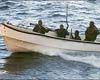 Moscow (RIA Novosti) Jun 17, 2008
The ongoing hijacking of ships off the Somalia coast long ago became a routine part of maritime life in the Arabian Sea. One of the most recent incidents was the seizure of the tanker Amiya Scan, which is owned by Dutch company Reider Shipping. |
|
|

| The content herein, unless otherwise known to be public domain, are Copyright 1995-2007 - SpaceDaily.AFP and UPI Wire Stories are copyright Agence France-Presse and United Press International. ESA Portal Reports are copyright European Space Agency. All NASA sourced material is public domain. Additional copyrights may apply in whole or part to other bona fide parties. Advertising does not imply endorsement,agreement or approval of any opinions, statements or information provided by SpaceDaily on any Web page published or hosted by SpaceDaily. Privacy Statement |

 del.icio.us
 Digg
Digg Reddit
 YahooMyWeb
 Google
 Facebook