
 |
 |
 |
 |
 |
 |
 |
 |
 |

 |
Origins Of The Brain
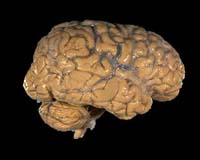
London, UK (SPX) Jun 13, 2008 One of the great scientific challenges is to understand the design principles and origins of the human brain. New research has shed light on the evolutionary origins of the brain and how it evolved into the remarkably complex structure found in humans. The research suggests that it is not size alone that gives more brain power, but that, during evolution, increasingly sophisticated molecular processing of nerve impulses allowed development of animals with more complex behaviours. The study shows that two waves of increased sophistication in the structure of nerve junctions could have been the force that allowed complex brains - including our own - to evolve. The big building blocks evolved before big brains. Current thinking suggests that the protein components of nerve connections - called synapses - are similar in most animals from humble worms to humans and that it is increase in the number of synapses in larger animals that allows more sophisticated thought. "Our simple view that 'more nerves' is sufficient to explain 'more brain power' is simply not supported by our study," explained Professor Seth Grant, Head of the Genes to Cognition Programme at the Wellcome Trust Sanger Institute and leader of the project. "Although many studies have looked at the number of neurons, none has looked at the molecular composition of neuron connections. We found dramatic differences in the numbers of proteins in the neuron connections between different species". "We studied around 600 proteins that are found in mammalian synapses and were surprised to find that only 50 percent of these are also found in invertebrate synapses, and about 25 percent are in single-cell animals, which obviously don't have a brain." Synapses are the junctions between nerves where electrical signals from one cell are transferred through a series of biochemical switches to the next. However, synapses are not simply soldered joints, but mini-processors that give the nervous systems the property of learning and memory. Remarkably, the study shows that some of the proteins involved in synapse signalling and learning and memory are found in yeast, where they act to respond to signals from their environment, such as stress due to limited food or temperature change. "The set of proteins found in single-cell animals represents the ancient or 'protosynapse' involved with simple behaviours," continues Professor Grant. "This set of proteins was embellished by addition of new proteins with the evolution of invertebrates and vertebrates and this has contributed to the more complex behaviours of these animals. "The number and complexity of proteins in the synapse first exploded when muticellular animals emerged, some billion years ago. A second wave occurred with the appearance of vertebrates, perhaps 500 million years ago" One of the team's major achievements was to isolate, for the first time, the synapse proteins from brains of flies, which confirmed that invertebrates have a simpler set of proteins than vertebrates. Most important for understanding of human thought, they found the expansion in proteins that occurred in vertebrates provided a pool of proteins that were used for making different parts of the brain into the specialised regions such as cortex, cerebellum and spinal cord. Since the evolution of molecularly complex, 'big' synapses occurred before the emergence of large brains, it may be that these molecular evolutionary events were necessary to allow evolution of big brains found in humans, primates and other vertebrates. Behavioural studies in animals in which mutations have disrupted synapse genes support the conclusion that the synapse proteins that evolved in vertebrates give rise to a wider range of behaviours including those involved with the highest mental functions. For example, one of the 'vertebrate innovation' genes called SAP102 is necessary for a mouse to use the correct learning strategy when solving mazes, and when this gene is defective in human it results in a form of mental disability. "The molecular evolution of the synapse is like the evolution of computer chips - the increasing complexity has given them more power and those animals with the most powerful chips can do the most," continues Professor Grant. Simple invertebrate species have a set of simple forms of learning powered by molecularly simple synapses, and the complex mammalian species show a wider range of types of learning powered by molecularly very complex synapses. "It is amazing how a process of Darwinian evolution by tinkering and improvement has generated, from a collection of sensory proteins in yeast, the complex synapse of mammals associated with learning and cognition," said Dr Richard Emes, Lecturer in Bioinformatics at Keele University, and joint first author on the paper. The new findings will be important in understanding normal functioning of the human brain and will be directly relevant to disease studies. Professor Grant's team have identified recently evolved genes involved in impaired human cognition and modelled those deficits in the mouse. "This work leads to a new and simple model for understanding the origins and diversity of brains and behaviour in all species" says Professor Grant, adding that "we are one step closer to understanding the logic behind the complexity of human brains" Community Email This Article Comment On This Article Share This Article With Planet Earth
Related Links Wellcome Trust Sanger Institute Institute for Adaptive Evolution, Edinburgh Institute for Science and Technology in Medicine, Keele All About Human Beings and How We Got To Be Here
 Human Mobility Is Not A Random Event
 Boston, MA (SPX) Jun 10, 2008
In a groundbreaking paper published as a cover story in this week's Nature magazine, Northeastern University physicist Professor Albert-Laszlo Barabasi and his team found that humans can be characterized based on how they move. |
|
|

| The content herein, unless otherwise known to be public domain, are Copyright 1995-2007 - SpaceDaily.AFP and UPI Wire Stories are copyright Agence France-Presse and United Press International. ESA Portal Reports are copyright European Space Agency. All NASA sourced material is public domain. Additional copyrights may apply in whole or part to other bona fide parties. Advertising does not imply endorsement,agreement or approval of any opinions, statements or information provided by SpaceDaily on any Web page published or hosted by SpaceDaily. Privacy Statement |
 del.icio.us
 Digg
Digg Reddit
 YahooMyWeb
 Google
 Facebook