|
 |
 |
 |
 |
 |
 |
 |
 |

 |
Orbital Fires Up A Little Static In Engine Test
Dulles - June 15, 1999 - Orbital Sciences has successfully tested an advanced, low-cost upper stage rocket engine Orbital is developing for the Upper Stage Flight Experiment (USFE) program in conjunction with NASA and US Air Force. The test occurred in a special facility at NASA's Stennis Space Center in Mississippi. The pressure-fed USFE engine, which uses a non-toxic hydrogen peroxide propellant, was static fired for 140 seconds, demonstrating its ability to provide 10,000 pounds of thrust. The USFE engine will now be combined with other flight components such as avionics, thrust vector control and advanced propellant tank structures to create a full-scale rocket stage. It will be flight tested in late 2001 on a launch vehicle that Orbital is currently building for the Air Force. The flight test will originate from the new commercial spaceport on Kodiak Island, Alaska, where Orbital conducted the inaugural mission in late 1998. Once all USFE development work and testing is complete, the engine is planned to be used as an upper stage and propulsion system for future reusable launch vehicles, crew transport vehicles and space planes. "The successful USFE test marks a significant milestone in the creation of upper stage rocket engines for government and commercial applications," said Mr. J. R. Thompson, Executive Vice President and General Manager of Orbital's Launch Systems Group. "Using non-toxic and environmentally clean propellants, this engine will also help to lower the cost and improve the safety of future space vehicle operations," he added. "As NASA's primary center for testing and flight-certifying rocket propulsion systems for the Space Shuttle and future space vehicles, we are extremely proud to be participating in this ground-breaking program," said Mr. Roy Estess, Director of the Stennis Space Center. "The USFE program is demonstrating the kind of advanced features that will become standard with next-generation propulsion systems." Orbital is already one of the world's leading launch services companies, having conducted over 130 rocket launches in the last 15 years. With its pair of proven, cost-effective space launch vehicles, the air-launched Pegasus and the larger, ground-launched Taurus, Orbital has delivered over 65 satellites into orbit since 1990. Orbital is also one of the world's leading manufacturers and operators of suborbital rockets, used most often by U.S. Department of Defense customers to test defensive missile systems and other advanced technologies. Additionally, Orbital is developing the X-34 rocketplane for NASA to demonstrate reusable launch vehicle technologies, as well as to host hypersonic aerospace research projects and micro-gravity experiments.
SELV Reports at SpaceDaily
Email This Article Comment On This Article Related Links Space
 Satellite Launch To Boost DTH In India
 Calcutta, India (SPX) Dec 28, 2005
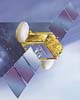
The successful launch Thursday of India's heaviest satellite from spaceport of Kourou in French Guyana may have boosted the country's space research efforts to yet another level, but it has also lifted the spirits of at least three Direct-To-Home televisions broadcasters, one of which has been waiting for years to launch its services in India. |
|
|

|
|
|
|
|
|
|
|
|
|
|
|
| The content herein, unless otherwise known to be public domain, are Copyright 1995-2006 - SpaceDaily.AFP and UPI Wire Stories are copyright Agence France-Presse and United Press International. ESA PortalReports are copyright European Space Agency. All NASA sourced material is public domain. Additionalcopyrights may apply in whole or part to other bona fide parties. Advertising does not imply endorsement,agreement or approval of any opinions, statements or information provided by SpaceDaily on any Web page published or hosted by SpaceDaily. Privacy Statement |