|
 |
 |
 |
 |
 |
 |
 |
 |

 |
Ophelia Gentler On Hurricane-Battered US Than Catastrophic Katrina
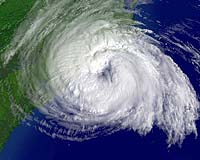
Beaufort, North Carolina (AFP) Sep 15, 2005 The southeastern coast of North Carolina took a strong beating from Hurricane Ophelia but escaped with little damage and no deaths, in stark contrast to the storm's deadly predecessor, Katrina, which ravaged the US Gulf Coast. But the threat was not over yet, as Ophelia's force was to be felt throughout the day Thursday, authorities warned. The hurricane was moving "erratically" toward the east-northeast at around three miles (five kilometers) per hour at 1500 GMT, packing maximum sustained winds near 80 miles (130 kilometers) per hour, the National Hurricane Center said in a statement. "While the center of Ophelia is forecast to remain just offshore and move parallel to the North Carolina Outer Banks, ... the northern eyewall is expected to remain over the Outer Banks during the next 12 to possibly 24 hours," it said. It added that "Ophelia will likely begin to gradually weaken." Still, Ophelia - the seventh hurricane of the Atlantic storm season - dumped heavy rainfall on the region, and North Carolina Governor Mike Easley warned of floods. He noted "significant" flooding along major highways and several road closures. "We need people to pay careful attention to this," Easley said. "The storm surge will come back east," he warned. "That's when you'll see most of the flooding that we talked about yesterday (Wednesday), dealing with low-lying areas, dealing with rivers and also striking the Outer Banks and the barrier islands." Residents along the coast appeared to have heeded local authorities' orders to evacuate and head for more central areas of the state, in the event that Ophelia hammered the coast, as vacant hotel rooms were in short supply about 50 miles (80 kilometers) inland. "We're very optimistic at this point that this storm caused no deaths and no injuries in Carteret County," said Jack Veit, an emergency services spokesman for the county, which includes the Outer Banks region. In the city of Beaufort, some residents drove around the city in their cars to survey the damage, but there was little to see: a fallen tree here, some damaged homes there and some overturned boats that had washed inland. There were no pedestrians on the streets, and homes were deserted. Authorities said the winds had already torn down power lines, cutting electricity to an estimated 100,000 people in North Carolina. The federal government, still smarting from the political backlash from its response to Katrina, took no chances this time around. The Federal Emergency Management Agency (FEMA) had about 250 specialists in the state already, the governor said. The National Guard sent about 50 troops to areas considered most at risk. The Homeland Security Department said several hundred trailers of water and ice and dozens of trailers of emergency meals had been pre-positioned in several states around North Carolina. It said the Defense Department had put troops and engineers on alert to take part in any emergency operation, and extra medical teams had also been warned. Katrina threw up a storm surge of 7.6 metres (25 feet) in some places along the Gulf Coast on August 29 and caused massive flooding in New Orleans. More than 700 people have been confirmed dead in Louisiana, Mississippi, Florida and Alabama, but the search for bodies is ongoing. US authorities say it will take years and tens of billions of dollars to rebuild from Katrina's devastation. Katrina was category four on the Saffir-Simpson hurricane intensity scale when it made landfall, while Ophelia is a category one storm. Community Email This Article Comment On This Article Related Links SpaceDaily Search SpaceDaily Subscribe To SpaceDaily Express Bringing Order To A World Of Disasters When the Earth Quakes A world of storm and tempest
 New Orleans Colleges To Reopen This Week
 New Orleans, Louisiana (AFP) Jan 05, 2006
Thousands of students and faculty are returning to New Orleans' eight colleges and universities this week for the first time since hurricane Katrina flooded the city four months ago. |
|
|

| The content herein, unless otherwise known to be public domain, are Copyright 1995-2006 - SpaceDaily.AFP and UPI Wire Stories are copyright Agence France-Presse and United Press International. ESA PortalReports are copyright European Space Agency. All NASA sourced material is public domain. Additionalcopyrights may apply in whole or part to other bona fide parties. Advertising does not imply endorsement,agreement or approval of any opinions, statements or information provided by SpaceDaily on any Web page published or hosted by SpaceDaily. Privacy Statement |