|
 |
 |
 |
 |
 |
 |
 |
 |

 |
One Image Planned During Descent Of Phoenix
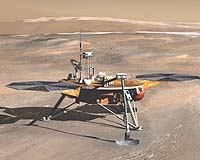
Pasadena CA (JPL) Jul 06, 2007 Extensive testing of NASA's Phoenix Mars Lander in preparation for an August launch has uncovered a potential data-handling problem in time to modify plans for use of a camera during the final minutes of arrival at Mars. The testing results led to a decision to take just one photograph with the spacecraft's Mars Descent Imager. The mission will still be capable of accomplishing all of its science goals. The issue is not the camera itself, which is capable of taking multiple downward-looking images of the landing area during the final three minutes of flight. Tests of the assembled lander found that an interface card has a small possibility of triggering loss of some vital engineering data if it receives imaging data during a critical phase of final descent. That possibility is considered an unacceptable risk, and the potential problem with the interface card was identified too late for changing hardware. The card has circuitry that routes data from various parts of the payload. The descent camera can store one image internally. The mission's science team plans to use that image to place in context observations of the landing site acquired by the lander's other tools -- including two cameras, two microscopes, a robotic arm and analytical instruments. This single view will show smaller details of the terrain than will be discernable in images acquired by the High Resolution Imaging Science Experiment camera on NASA's Mars Reconnaissance Orbiter, which itself can resolve features smaller than the Phoenix lander. Preparation of the spacecraft is moving on schedule toward loading propellant before encapsulating Phoenix into the third stage of its Delta II launch vehicle in mid-July. A three-week period of launch opportunity dates begins Aug. 3. Phoenix will go to an arctic plain where an icy layer is expected to lie within arm's reach of the surface. There it will examine whether the environment beneath the surface has been a favorable habitat for microbial life. It will also investigate the history of the water in the ice and monitor Mars' arctic weather. Community Email This Article Comment On This Article Related Links Phoenix at LPL Mars News and Information at MarsDaily.com Lunar Dreams and more
 Scientists Find That Earth And Mars Are Different To The Core
 Oxford UK (SPX) Jul 06, 2007
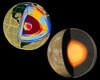
Research comparing silicon samples from Earth, meteorites and planetary materials, published in Nature (28th June 2007), provides new evidence that the Earth's core formed under very different conditions from those that existed on Mars. It also shows that the Earth and the Moon have the same silicon isotopic composition supporting the theory that atoms from the two mixed in the early stages of their development. This latest research which was carried out by scientists from Oxford University along with colleagues from University of California, Los Angeles (UCLA) and the Swiss Federal Institute of Technology in Zurich (ETH) compared silicon isotopes from rocks on Earth with samples from meteorites and other solar system materials. |
|
|

| The content herein, unless otherwise known to be public domain, are Copyright 1995-2007 - SpaceDaily.AFP and UPI Wire Stories are copyright Agence France-Presse and United Press International. ESA Portal Reports are copyright European Space Agency. All NASA sourced material is public domain. Additional copyrights may apply in whole or part to other bona fide parties. Advertising does not imply endorsement,agreement or approval of any opinions, statements or information provided by SpaceDaily on any Web page published or hosted by SpaceDaily. Privacy Statement |