|
 |
 |
 |
 |
 |
 |
 |
 |

 |
Off-The-Shelf Camera Device To Hunt For Distant Planets
Pasadena - Mar 12, 2002 It could fit on your desk, and it's made mostly from parts bought at a camera shop, but two scientists believe their new instrument will help them find a slew of large planets orbiting stars in our Milky Way galaxy. "An amateur astronomer could do this, except maybe for the debugging of the software, which requires several people working 10 hours a day," said Dr. David Charbonneau of the California Institute of Technology in Pasadena. "But it's easy to understand what's going on and cheap to build the equipment. That's why everyone thinks it's an ideal project, if it works." The assembly of the new instrument is a cooperative effort between Charbonneau and Dr. John Trauger of NASA'S Jet Propulsion Laboratory in Pasadena, which is managed by Caltech. "David's approach promises to locate new planets orbiting distant stars. The instrument is simple and straightforward, taking advantage of spare parts and computer code we already have on hand at JPL, and we hope to have it up and running in a few months," Trauger said. Charbonneau and his colleagues will soon use their gizmo to begin a three-year survey for extra-solar planets at Palomar Observatory in San Diego County. The instrument is based on a standard telephoto lens for a 35-millimeter camera. It will sweep the skies, looking for "hot Jupiters," or large, gaseous planets, as their fast orbits take them in front of other stars, into the line of sight between a star and Earth. Astronomers will watch for the "wink" from the star as an orbiting planet partially blocks its light. Charbonneau, a recent import to the Caltech astronomy staff from the Harvard-Smithsonian Center for Astrophysics, Cambridge, Mass., is a leading authority on the search for such "transiting planets." The new instrument uses a standard 300-millimeter Leica camera lens, with a charge-coupled device, or CCD. The CCD, which costs $22,000, will be mounted in a specially constructed camera housing to fit at the back of the lens. The entire device will be fitted onto an inexpensive equatorial mount, available at many stores carrying amateur astronomical equipment. "Basically, the philosophy of this project is that, if we can buy the stuff we need off the shelf, we'll buy it," Charbonneau said. The project costs $100,000, a fraction of the cost of most large Earth and space-based telescopes. The Palomar staff will provide a small dome for the instrument, and the system will be automated so it can be operated remotely. The new telescope will be linked with an existing weather system, which will monitor atmospheric conditions and determine whether the dome should be opened. Charbonneau will be able to photograph a single square of sky about five degrees by five degrees. About 100 full moons or an entire constellation could fit in that field of view. With special software Charbonneau helped develop at Harvard- Smithsonian and the National Center for Atmospheric Research, he will compare many pictures of the same patch of sky to see if any of the thousands of stars in each field has "winked." If the software reveals a star has dimmed slightly, it could mean a planet passed in front of the star between exposures. Repeated measurements will allow Charbonneau to measure the orbital period and size of each planet. Further work with the 10-meter (33-foot) telescopes at Keck Observatory at Mauna Kea, Hawaii, will provide spectrographic data, and thus, will infer more detailed information about the planet. Weather permitting, Charbonneau will gather up to 300 images a night. With 20 good nights per month, about 6,000 images would be gathered each month for computer analysis. The ideal time will be in the fall and winter, when the Milky Way is in view, and an extremely high number of stars can be squeezed into each photograph. "It's estimated that about one in three stars in our field of view will be like the Sun, and one percent of Sun- like stars have a hot Jupiter, or a gas giant that is so close to the star that its orbit is about four or five days," Charbonneau said. "One-tenth of this 1-percent will be inclined in the right direction so that it will pass in front of the star, so maybe one in 3,000 stars will have a planet we can detect. Or if you want to be conservative, about one in 6,000." Community Email This Article Comment On This Article Related Links SpaceDaily Search SpaceDaily Subscribe To SpaceDaily Express Life Beyond Earth Lands Beyond Beyond - extra solar planets - news and science
 Latching Onto Lichen
 Moffett Field CA (SPX) Dec 06, 2005
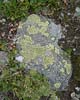
Bacteria can often survive the harsh conditions of space, and their toughness and adaptability have made them key candidates for the transfer of life between planets. But in a recent study by European scientists, lichen survived a trip in space even better than bacteria do. |
|
|

| The content herein, unless otherwise known to be public domain, are Copyright 1995-2006 - SpaceDaily.AFP and UPI Wire Stories are copyright Agence France-Presse and United Press International. ESA PortalReports are copyright European Space Agency. All NASA sourced material is public domain. Additionalcopyrights may apply in whole or part to other bona fide parties. Advertising does not imply endorsement,agreement or approval of any opinions, statements or information provided by SpaceDaily on any Web page published or hosted by SpaceDaily. Privacy Statement |