|
 |
 |
 |
 |
 |
 |
 |
 |

 |
Octillion Continues To Optimize Photovoltaic Properties Of NanoPower Window
Auburn Hills MI (SPX) Jan 07, 2008 Octillion is pleased to provide an update on its ongoing research and development activities for the Company"s first-of-its-kind transparent glass window potentially capable of generating electricity. Octillion"s NanoPower Window technology uses silicon nanoparticles that have the potential to convert conventional home, office and industrial glass windows into those capable of converting solar energy into electricity. The silicon nanoparticles are created through a unique electrochemical and ultrasound process that produces identically sized (1 to 4 nanometers in diameter) highly luminescent nanoparticles of silicon that provide varying wavelengths of photoluminescence with high quantum down-conversion efficiency of short wavelengths (50% to 60%). "Our silicon nanoparticles are the foundation of our NanoPower Windows," states Mr. Nicholas S. Cucinelli, President and CEO of Octillion Corp. "In fact, independent tests have shown that the same silicon nanoparticles used in Octillion"s NanoPower Window are also able to enhance the power output of conventional solar cells by up to 70% in the ultraviolet light range and 10% in the visible. Consequently, and contingent on the success of our ongoing research, we are optimistic that transparent cells based entirely on our nanomaterials will one day offer a cost-effective photovoltaic enhancement to conventional windows." In mid-2007, collaborating research scientists successfully engineered and assembled an early lab scale model of Octillion"s photovoltaic NanoPower Window, a see-through developmental prototype, which achieved optically active down-conversion and displayed good electrical properties with no electrical shorts. This significant milestone was achieved in part due to the successful development of a protocol for reliably depositing nanoparticles onto glass surfaces using a proprietary electro spray system able to produce nanofilms of controllable thickness. The electro spray deposition system allows the silicon nanoparticles to retain their high efficiency of down-conversion of UV light to the visible after being sprayed, a procedure that does not compromise the optical characteristics of the nanoparticles, both in intensity and spectral distribution, a prerequisite for efficient photovoltaic conversion. Since the development of the initial prototype, the Company has been working to establish photovoltaic characteristics in its NanoPower Window. These efforts include experimentation with different types and thicknesses of ultrathin transparent conductive coatings, verification of conversion efficiencies at various wavelengths (UV, blue, green, red, etc.), refinements to our electro spray deposition process, and variation of the deposition thickness of silicon nanoparticles in order to achieve maximum electronic transport and collection efficiency. Successful outcomes from the above noted experimentation will allow the Company to advance its research and development initiatives for the NanoPower Window. Future research goals will include, among other things, optimizing photovoltaic efficiency versus window transparency and eventually conducting a cost benefit engineering analysis. "In addition to building on the basic research supporting our NanoPower Windows," continues Mr. Cucinelli, "we are now also actively seeking to bolster our technology portfolio and accelerate our development by identifying, evaluating and potentially acquiring enabling and complementary photovoltaic and other alternative energy technologies. Our goal is to establish a robust pipeline of leading-edge alternative energy technologies that have the real and significant potential of radically transforming the way in which we power our built environment, including homes, offices and buildings." Community Email This Article Comment On This Article Related Links Octillion All About Solar Energy at SolarDaily.com
 Akeena Solar Licenses New Solar Panel Technology To Suntech
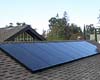 Los Gatos CA (SPX) Jan 07, 2008
Akeena Solar announced that its state-of-the-art solar panel technology, Andalay, will be distributed in Europe, Japan and Australia under a license agreement with Suntech Power Holdings. The terms of the Licensing Agreement authorize Suntech to distribute Andalay in Europe, Japan and Australia commencing in January 2008. This Licensing Agreement is in addition to Suntech's previous agreement to manufacture Andalay solar panels. |
|
|

| The content herein, unless otherwise known to be public domain, are Copyright 1995-2007 - SpaceDaily.AFP and UPI Wire Stories are copyright Agence France-Presse and United Press International. ESA Portal Reports are copyright European Space Agency. All NASA sourced material is public domain. Additional copyrights may apply in whole or part to other bona fide parties. Advertising does not imply endorsement,agreement or approval of any opinions, statements or information provided by SpaceDaily on any Web page published or hosted by SpaceDaily. Privacy Statement |