|
 |
 |
 |
 |
 |
 |
 |
 |

 |
Ocean Dead Zones Cause Sex Changes In Fish Increases Extinction Threat
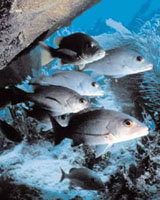
Washington DC (SPX) Mar 30, 2006 Oxygen depletion in the world's oceans, primarily caused by agricultural run-off and pollution, could spark the development of far more male fish than female, thereby threatening some species with extinction, according to a study published today on the Web site of the American Chemical Society journal, Environmental Science & Technology. The finding, by Rudolf Wu, Ph.D., and colleagues at the City University of Hong Kong, raises new concerns about vast areas of the world's oceans, known as "dead zones," that lack sufficient oxygen to sustain most sea life. Fish and other creatures trapped in these zones often die. Those that escape may be more vulnerable to predators and other stresses. This new study, Wu says, suggests these zones potentially pose a third threat to these species � an inability of their offspring to find mates and reproduce. The researchers found that low levels of dissolved oxygen, also known as hypoxia, can induce sex changes in embryonic fish, leading to an overabundance of males. As these predominately male fish mature, it is unlikely they will be able to reproduce in sufficient numbers to maintain sustainable populations, Wu says. Low oxygen levels also might reduce the quantity and quality of the eggs produced by female fish, diminishing their fertility, he adds. In their experiments, Wu and his colleagues found low levels of dissolved oxygen � less than 2 parts per million � down-regulated the activity of certain genes that control the production of sex hormones and sexual differentiation in embryonic zebra fish. As a result, 75 percent of the fish developed male characteristics. In contrast, 61 percent of the zebra fish spawn raised under normal oxygen conditions � more than 5 parts per million � developed into males. The normal sex ratio of zebra fish is about 60 percent male and 40 percent female, Wu says. "Reproductive success is the single most important factor in the sustainability of species," Dr. Wu says. "In many places, the areas affected by hypoxia are usually larger than the spawning and nursery grounds of fish. Even though some tolerant species can survive in hypoxic zones, they may not be able to migrate out of the zone and their reproduction will be impaired." Hypoxia is considered one of the most serious threats to marine life and genetic diversity, Wu says. It occurs when excessive amounts of plant nutrients, particularly nitrogen, accumulate in oceans, freshwater lakes and other waterways. These nutrients trigger the growth of huge algae and phytoplankton blooms. As these blooms die, they sink to the ocean floor where they are decomposed by bacteria and other microorganisms. Decomposition depletes most of the oxygen in the surrounding water, making it difficult for marine life to survive. Although some hypoxic areas � dead zones � develop naturally, scientific evidence suggests in many coastal areas and inland waters, hypoxia is primarily caused by agricultural run-off (particularly fertilizers) and discharge of domestic and industrial wastewaters. Dead zones are developing along the coasts of the major continents, and they are spreading over larger areas of the sea floor, Wu says. The United Nations Environmental Programme estimates nearly 150 permanent and recurring dead zones exist worldwide, including 43 in U.S. coastal waters. In the Gulf of Mexico, for instance, a dead zone the size of New Jersey, some 7,000 square miles, develops each summer. Other affected areas of the United States include coastal Florida and California, the Chesapeake Bay and Long Island Sound. Community Email This Article Comment On This Article Related Links American Chemical Society City University of Hong Kong Water News - Science, Technology and Politics
 Nestle Backs Red Cross Over For Clean Water In Poor Countries
 Geneva (AFP) Mar 30, 2006
The Red Cross gained backing from the food giant Nestle on Wednesday for a global project to tackle chronic shortages of clean water in impoverished communities in developing countries. |
|
|

| The content herein, unless otherwise known to be public domain, are Copyright 1995-2006 - SpaceDaily.AFP and UPI Wire Stories are copyright Agence France-Presse and United Press International. ESA PortalReports are copyright European Space Agency. All NASA sourced material is public domain. Additionalcopyrights may apply in whole or part to other bona fide parties. Advertising does not imply endorsement,agreement or approval of any opinions, statements or information provided by SpaceDaily on any Web page published or hosted by SpaceDaily. Privacy Statement |