|
 |
 |
 |
 |
 |
 |
 |
 |

 |
Norway Sets Ambitious Carbon Neutral Climate Target
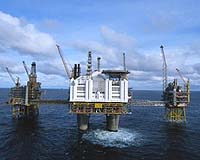
Oslo (AFP) May 01, 2007 Fewer roses on a wintry Valentine's Day, less room for kids in smaller cars and costlier holidays in the tropics: life in Norway will become less glamorous but more climate-friendly as the country aims to be "carbon neutral" by 2050. As the world's leading climate change experts meet in Bangkok, from where they are due to issue a key report Friday, Norway is providing an example of the kind of direction some countries are heading. When Prime Minister Jens Stoltenberg on April 19 announced Norway's pledge to reduce CO2 emissions to zero, the Scandinavian nation set the most ambitious climate target in the world. The government has yet to detail the concrete measures it will undertake to achieve the goal, but experts say changing lifestyles are inevitable. Norway already covers almost all of its energy needs with hydroelectricity, a "clean" energy source, so its CO2 reductions will have to be made elsewhere, notably in the transport sector. Perishable foods flown around the world by airplane -- a highly pollutant form of transportation -- could be among the first to go in climate-conscious Norway. "The price tags on products will have to reflect the distance they have travelled," said Helge Drange, a scientist at the Nansen environmental research centre. "Roses from Africa and the Netherlands will be less affordable. We will buy an increasing amount of local products," he said. Because transportation is so inexpensive these days, more than half of the fish caught off Norway in the Barents Sea and sold in the country is sent to China to be filleted before being sent back here for sale. "Neither the manufacturer nor the consumer pay the true cost of energy today," said Pierre Perbos, head of the French environmental activist group Reseau Action Climat-France. "The climate is paying the price. It's completely absurd that kerosene is not taxed," he said. Low-cost flights could also be a thing of the past, as ticket prices will have to be increased to compensate for the CO2 emissions of each flight. Financial incentives will encourage owners of SUVs and other large vehicles to buy smaller, energy-efficient cars run on hybrid engines and, eventually, hydrogen power, pending major technological advances in the field. Residential areas and offices will also be concentrated in the same area for more efficient energy use and to optimize public transport. It remains to be seen how much of Norway's CO2 reductions will come from measures taken within the country, how much will come from the purchase of emission rights, and how much will come from investments in "clean" energy projects abroad as allowed under the Kyoto Protocol. "The climate keeps a tally of the greenhouse gas molecules that enter the atmosphere. It doesn't care about the sender's address," said Helge Drange. But the issue is sensitive -- symbolically, politically and economically -- as attempts to reduce emissions within Norway's borders are much costlier than financing cuts abroad. The country is expected to emit 60 million tonnes of carbon dioxide in 2012. At current prices -- generally seen by experts as too low -- Norway could buy CO2 quotas to cover its emissions for a billion euros (1.36 billion dollars) a year, according to the European research and analysis organisation Point Carbon. That is a drop in the bucket compared to the hundreds of billions of dollars that Norway, one of the world's biggest oil and gas exporters, has yielded so far from its lucrative offshore fields. According to Frederic Hauge, the head of the Norwegian environmental organisation Bellona, Norway has a "moral responsibility" to develop new technologies that are out-of-reach for other countries precisely because it has built its immense wealth on the climate-unfriendly oil industry. And, he notes, "there's a lot of money to be made in this sector."
Source: Agence France-Presse Email This Article
Related Links  Paris, France (ESA) Apr 29, 2007
As climate change continues to make headlines across the world, participants at the 2007 Envisat Symposium this week are hearing how Earth observation satellites allow scientists to better understand the parameters involved in global warming and how this is impacting the planet. |
|
|

| The content herein, unless otherwise known to be public domain, are Copyright 1995-2006 - SpaceDaily.AFP and UPI Wire Stories are copyright Agence France-Presse and United Press International. ESA PortalReports are copyright European Space Agency. All NASA sourced material is public domain. Additionalcopyrights may apply in whole or part to other bona fide parties. Advertising does not imply endorsement,agreement or approval of any opinions, statements or information provided by SpaceDaily on any Web page published or hosted by SpaceDaily. Privacy Statement |