|
 |
 |
 |
 |
 |
 |
 |
 |

 |
Northrop Grumman's Load-Bearing Antennas Offer
El Segundo - Mar 16, 2004 Northrop Grumman Corporation will help the U.S. Air Force enhance the surveillance capabilities of aerial vehicles by embedding antennas in the primary load-bearing structures of composite aircraft wings. The new approach could lead to antennas as large as the surface area of a wing with enough sensitivity to simultaneously detect ground-moving targets through dense foliage and track air-to-air missile threats. Northrop Grumman and the Air Force Research Laboratory will share the costs of maturing the antenna integration technology under a five-year, $12 million effort called the Low-Band Structural Array (LOBSTAR) program. The effort could benefit unmanned aerial reconnaissance systems such as the Air Force's Global Hawk, the Defense Advanced Research Projects Agency's Joint Unmanned Combat Air System, and the Air Force Research Laboratory's future Sensor Craft concept. "Conformal load-bearing antenna structure (CLAS) technology converts otherwise passive structures, such as a wing, into a system element that increases avionics performance and reduces airframe weight and cost," said Allen Lockyer, Northrop Grumman's LOBSTAR program manager. "It also allows us to implement mission functionality that simply would not be possible using conventional antenna technologies." Northrop Grumman has previously used CLAS technology to increase the functionality of other passive aircraft structures such as the tail and the fuselage, he added. The LOBSTAR program represents the first government-funded application of CLAS to low-frequency radar and large primary wing structures. The large surface area dedicated to the antenna provides the needed gain and coverage to detect slow moving targets masked by heavy jungle foliage, a task that's been previously deemed impossible with conventional antennas. Northrop Grumman's LOBSTAR contract includes a scale-up phase that will test the limits of a five-element-by-five-element structural antenna subarray developed during the company's S-CLAS program, a precursor program to LOBSTAR; and a flight test phase to evaluate the performance of that array in a BAC 1-11 test bed aircraft against real targets. To date, the company has demonstrated that the S-CLAS test array can sustain peak loads of 10,000 pounds per inch. Northrop Grumman's Integrated Systems sector will lead the LOBSTAR effort with overall program structural design and material manufacturing responsibilities. The company's Electronic Systems sector is the key partner providing the state-of-the-art antenna expertise. "Five years ago, no one would have tried to integrate an antenna into a wing box that shared the primary structural load. That was just a no-no," explained Kevin Alt, Northrop Grumman's LOBSTAR principal investigator. "But by bringing the right disciplines together, we've achieved some surprising and very significant results." Northrop Grumman has been developing "smart" structures and related technologies for aircraft and unmanned aerial vehicles since the late 1980s. The company is currently exploiting its earlier success with CLAS technology to integrate load-bearing antennas in critical structural components of the F-35 Joint Strike Fighter. Community Email This Article Comment On This Article Related Links Northrop Grumman Integrated Systems SpaceDaily Search SpaceDaily Subscribe To SpaceDaily Express Space Technology News - Applications and Research
 Industry Team Achieve New Communications Technology With AESA Radars
 Baltimore MD (SPX) Jan 12, 2006
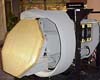
A team comprised of three leading US aerospace and defense contractors has demonstrated an innovative technological use of active electronically scanned array (AESA) radars for high-bandwidth communications. |
|
|

| The content herein, unless otherwise known to be public domain, are Copyright 1995-2006 - SpaceDaily.AFP and UPI Wire Stories are copyright Agence France-Presse and United Press International. ESA PortalReports are copyright European Space Agency. All NASA sourced material is public domain. Additionalcopyrights may apply in whole or part to other bona fide parties. Advertising does not imply endorsement,agreement or approval of any opinions, statements or information provided by SpaceDaily on any Web page published or hosted by SpaceDaily. Privacy Statement |