|
 |
 |
 |
 |
 |
 |
 |
 |

 |
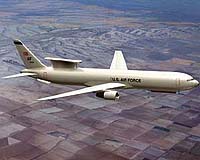
Northrop Grumman Demonstrates A Robust E-10 Battle Management Subsystem
Melbourne - Apr 01, 2004 The Northrop Grumman-led E-10 aircraft Battle Management Command and Control (BMC2) team continued validating its concepts for a platform-independent BMC2 system with the most demanding and comprehensive demonstration yet of the architecture's real-time command and control capabilities. The exercises, designated Constellation III, were the latest in a series of analytical research trials and focused on the cruise missile defense mission of the E-10A and the unmanned aerial vehicle (UAV) control capabilities of the system. They were designed to exercise and demonstrate the network-centric battle-management capabilities of the team's proposed BMC2 architecture. For Constellation III, operators in "hunter," "decider" and "killer" positions in the company's Crew Area Virtual Environment (CAVE), a functional and evolving mock-up of the E-10 BMC2 subsystem, in Melbourne, handled dynamic scenarios where theater cruise missiles were detected, identified, targeted and destroyed in a matter of minutes. At the same time, a CAVE crew commander stationed in Northrop Grumman's Cyber Warfare Integration Network (CWIN) facility, in Washington, D.C., interacted in real-time with the Melbourne operators to demonstrate to visiting defense officials the seamless nature of the company's CWIN capability. The CAVE was also connected externally to the Defense Advanced Research Procurement Agency-funded "swarming" UAV prototype aircraft operating from the Tucson International Modelplex facility in Arizona. The crew demonstrated live UAV control including sensor data collection. Last December, the same team demonstrated live UAV control and sensor collection with the Proteus experimental aircraft acting as a Global Hawk surrogate. "Constellation was a very successful test of how well the BMC2 system performs when seconds make the difference in warfighter responsiveness," said John Casko, director of the company-led BMC2 team. "We're taking the time out of Time Critical Targeting." According to Casko, the exercises generated systems engineering insights for the entire team. "Our team is already integrating and solving the types of real-world problems such as cruise missile defense and UAV control that would not typically be addressed until after contract award. "We're using fully instrumented data obtained from the Constellation missions to evaluate measures of effectiveness and measures of performance, and to gain insights that we can use to further refine our open systems architecture solution," explained Casko. "We're also conducting effective evaluations for reusing existing system software, therefore reducing the cost to the government." According to Scott Seymour, Northrop Grumman corporate vice president and president of the company's Integrated Systems sector, Constellation III is typical of the proactive work that Northrop Grumman is doing to help its customers address the challenges of the integrated battlespace. "Constellation III showcased our ability to leverage CWIN's linkages with the CAVE to create the dynamic, network centric environment needed to minimize technical, schedule, and cost risk during the spiral development of new, joint war fighting capabilities like the E-10 BMC2 subsystem," said Seymour. "It also is proving to be a superb example of how a large-scale distributed engineering environment can be valuable in providing an industry-wide "trade center" where future network-centric concepts and technologies can be tested without compromise." Community Email This Article Comment On This Article Related Links Northrop Grumman Integrated Systems SpaceDaily Search SpaceDaily Subscribe To SpaceDaily Express Military Space News at SpaceWar.com
 Space Group To Activate New Unit
 Colorado Springs CO (SPX) Jan 6, 2006
Air Force Reserve Command's 310th Space Group will travel deeper into the space program when it activates a new unit Jan. 7. Headquarters Reserve National Security Space Institute will be a Reserve associate unit to the National Security Space Institute in Colorado Springs, Colo. The institute is the Department of Defense's focal point for providing education about space power in joint warfighting. |
|
|

| The content herein, unless otherwise known to be public domain, are Copyright 1995-2006 - SpaceDaily.AFP and UPI Wire Stories are copyright Agence France-Presse and United Press International. ESA PortalReports are copyright European Space Agency. All NASA sourced material is public domain. Additionalcopyrights may apply in whole or part to other bona fide parties. Advertising does not imply endorsement,agreement or approval of any opinions, statements or information provided by SpaceDaily on any Web page published or hosted by SpaceDaily. Privacy Statement |