|
 |
 |
 |
 |
 |
 |
 |
 |

 |
Northrop Grumman Delivers First Navy Mine Detection Pod
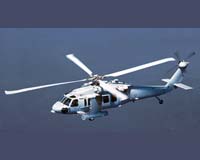
Melbourne FL (SPX) Jan 31, 2007 Northrop Grumman delivered the first production Airborne Laser Mine Detection System (ALMDS) pod to the U.S. Navy in ceremonies here last week. The ALMDS system is designed to operate from the MH-60S helicopter, using a Laser Imaging Detection and Ranging blue-green laser to detect, localize and classify near surface, moored and floating sea mines. "Northrop Grumman has been aggressively pursuing emerging technologies to combat the growing threat from mines," said Robert Johnston, director of Northrop Grumman's Mine Countermeasures Program. "The transformational mine detection technology used in ALMDS is critical for creating safer passage around the world for our servicemen and women." "This milestone represents an important step forward as we are now delivering the next generation in mine countermeasures technology," said Gary A. Humes, the Navy's mine warfare program manager. "Because ALMDS has no in-water components, it will help shorten the detection timeline and maximize the helicopter's time on station, thereby providing the maneuvering force with essential capability to dominate the complex, high-operational tempo environment of the littorals." Today's delivery is a result of a $35.7 million contract awarded in April 2006 for a low-rate initial production (LRIP) of two AN/AES-1 ALMDS pods. A second LRIP contact is planned to start this spring for an additional two pods following developmental testing. The third LRIP contract and full rate production are planned in 2009 and 2010 respectively for an additional eleven pods. ALMDS is an important element of the mine warfare mission package designed for the Littoral Combat Ship (LCS). LCS will host five airborne mine countermeasures systems, developed to provide aircraft carrier battle strike groups and expeditionary strike groups with full-spectrum organic mine hunting and reconnaissance capability. The ALMDS pods are produced at Northrop Grumman's facility in Melbourne, Fla. This facility is the home of two additional Navy mine countermeasures programs and an Army Counter Mine / Reconnaissance, Surveillance and Target Acquisition program. The ALMDS program is managed by the Program Executive Office, Littoral and Mine Warfare, Mine Warfare Program Office, PMS-495. The Navy plans to buy 45 ALMDS pods between now and 2018. Community Email This Article Comment On This Article Related Links Northrop Grumman Naval Warfare in the 21st Century Naval Warfare in the 21st Century
 Northrop Grumman Awarded Contract For Continuation Of DDG 1000 Detail Design
 Pascagoula MI (SPX) Jan 31, 2007
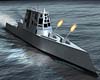
The U.S. Navy has awarded Northrop Grumman a $268 million contract for continuation of detail design efforts on the Zumwalt-class destroyer, DDG 1000. "This award reinforces the Navy's confidence in our ability to execute the program to cost and on schedule," said Brian Cuccias, Northrop Grumman vice president of DDG 1000. "We are extremely proud of our past performance and look forward to continuing this positive momentum through production and delivery." |
|
|

| The content herein, unless otherwise known to be public domain, are Copyright 1995-2006 - SpaceDaily.AFP and UPI Wire Stories are copyright Agence France-Presse and United Press International. ESA PortalReports are copyright European Space Agency. All NASA sourced material is public domain. Additionalcopyrights may apply in whole or part to other bona fide parties. Advertising does not imply endorsement,agreement or approval of any opinions, statements or information provided by SpaceDaily on any Web page published or hosted by SpaceDaily. Privacy Statement |