
 |
 |
 |
 |
 |
 |
 |
 |
 |

 |
North Pole may have no ice this summer: US expert
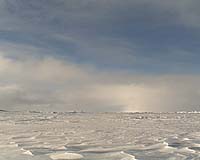
Washington (AFP) June 27, 2008 There could briefly be no ice at the North Pole this summer, a US scientist said Friday, an event that would mark a new stage in the melting of the Arctic ice sheets due to global warming. "We could have no ice at the North Pole at the end of this summer," Mark Serreze, a scientist with the National Snow and Ice Data Center in Boulder, Colorado, told AFP in an interview. "And the reason here is that the North Pole area right now is covered with very thin ice and this ice we call first-year ice, the ice that tends to melt out in the summer." If the ice, albeit briefly, were to break up completely this summer it would be the first time this had happened in human history. Serreze put the chances of this occurring at 50 percent -- if it does happen, in September "it's possible" that ships could sail from Alaska right to the North Pole. Last summer, melting ice allowed ships through the Arctic's Northern Passage linking the Atlantic and Pacific oceans for longer than ever before. Serreze pointed out that even if there were no ice left at the North Pole, there would be ice in other parts of the Arctic Ocean this summer. But he recognized the symbolism of an ice-free North Pole in the minds of the public, and said it was yet another indication of the environmental changes taking place because of global warming. "There should be ice at the North Pole, and there might not be at the end of the summer and that is telling that something is wrong," he said. "Clearly if you look over what we have seen in the past three years and where we were headed, we are in ... this long-term decline and we may have no ice at all in the Arctic Ocean in summer by 2030 or so," he said. He recalled that a few years ago, such a scenario was not expected to happen until between 2050 and 2100. Personally, he said that five years ago, he would not have imagined the situation occurring now. In last year's Arctic summer, the surface of the ice sheet in mid-September was the "the least sea ice that we have ever seen in satellite record, probably the least in a century," Serreze noted. The sheet melted by 23 percent, breaking the previous record from 2005. Arctic ice begins to melt in about mid-June and reaches its thinnest level around mid-September, before beginning to freeze over again and reaching a maximum around mid-March. Cutting greenhouse gas emissions to reduce the rate of global warming should slow down the effect of such melting but to reverse the trend will take a long time, Serreze said. On the upside, the melting of the Arctic ice sheet could help ships by providing an alternative route around the world to the Panama Canal, while it has also made accessible areas rich in natural resources, experts say. Community Email This Article Comment On This Article Share This Article With Planet Earth
Related Links Beyond the Ice Age
 Polar bear stranded on Iceland killed by police
 Reykjavik (AFP) June 18, 2008
Icelandic police said Wednesday they had shot and killed a polar bear discovered earlier this week on the island, which is hundreds of kilometres (miles) from the threatened species' natural habitat. |
|
|

| The content herein, unless otherwise known to be public domain, are Copyright 1995-2007 - SpaceDaily.AFP and UPI Wire Stories are copyright Agence France-Presse and United Press International. ESA Portal Reports are copyright European Space Agency. All NASA sourced material is public domain. Additional copyrights may apply in whole or part to other bona fide parties. Advertising does not imply endorsement,agreement or approval of any opinions, statements or information provided by SpaceDaily on any Web page published or hosted by SpaceDaily. Privacy Statement |
 del.icio.us
 Digg
Digg Reddit
 YahooMyWeb
 Google
 Facebook