|
 |
 |
 |
 |
 |
 |
 |
 |

 |
North Korea Missiles Test US Stance
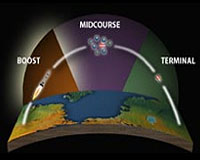
Seoul (UPI) Jul 06, 2006 The United States is poised to take a tougher policy -- likely focused on regime change -- on the road to disarming North Korea, which has ignored international calls for scrapping its nuclear weapons program, officials and analysts in Seoul say. The warning comes after North Korea fired seven missiles on Wednesday, including a long-range ballistic missile which is believed to have a range of up to 6,700 kilometers, or 4,163 miles, though it fell into the sea 7 minutes after being launched, according to South Korean defense officials. The tests have put the Asian-Pacific region on alert as the Taepodong-2 missile, which could be equipped with a nuclear warhead, may be capable of reaching the continental United States. The North's renewed missile activities come amid international concerns about Pyongyang's nuclear weapons program and are most likely to boost the voices of hard-liners in the Bush administration, with growing doubts about the Kim Jong Il regime. "There is high possibility that the missile launches would make the Bush administration more hawkish," a South Korean government official said, speaking on condition of anonymity. U.S. hard-liners are expected to seize the initiative to block possible reconciliation, he said, noting they are likely to pursue a preferred strategy of regime change or transformation. Some hawks had already called for a preemptive strike against the North's missile facilities since it started preparing for missile tests in May. In response to the North Korean missile tests, U.S. national security adviser Stephen Hadley described it as "provocative behavior," pledging to take "all necessary measures to protect ourselves and our allies." Not a few analysts in Seoul have expected the United States to kick off campaigns to stifle the Kim Jong Il regime if it fires any long-range missiles. Shin Sung-ho, a professor at Seoul National University, explains the Bush administration's current North Korea policy is based on so-called "hawk engagement," highlighted by conducting a final test for the North's return to dialogue before launching a full-fledged containment policy. "The United States is now calling for North Korea to rejoin the multilateral security talks. If the North fails to comply with the demand, the United States would use it as an excuse to choose stronger pressure on North Korea," he said. The United States would also blame North Korea for the failure of the six-nation talks, Shin and other analysts said. The Bush administration has already stepped up its pressure on North Korea since the communist country boycotted nuclear talks late last year, when Washington imposed financial sanctions for its alleged illicit activities, such as counterfeiting, money laundering and drug trafficking. In another pressure-cooking move, the United States gave a group of North Koreans official refugee status in May, which observers say could prompt a refugee exodus from the totalitarian state, including ruling elite members. Shin said next steps could include stronger pressure on the North. In October 2004, U.S. President George W. Bush signed the North Korea Human Rights Act that commits the government to help those who flee North Korea, including by resettling them in the United States. "Whereas South Korea considers the North's missile activities as a card to break the nuclear standoff with the United States, Washington sees it as a real threat to its security and is increasingly doubtful about the North Korean regime," said Kim Tae-hyo, a political science professor at Sungkyunkwan University in Seoul. "The United States has been extremely sensitive to any security threats to its territory since the Sept. 11 terror attack," said Nam Sung-wook, a North Korea professor at Korea University. Washington's toughening stance has embarrassed South Korean officials who are pushing for reconciliation and economic cooperation with Pyongyang. President Roh Moo-hyun has said his country would risk diplomatic troubles with the United States to block any moves to topple the North Korean regime. "The South Korean government does not agree with some forces in the United States that raise issues about North Korea's regime, put pressure on it and apparently desire to see its collapse," Roh said in a recent speech. "If the U.S. government tries to resolve problems through this kind of method, there will be friction between South Korea and the United States," he said.
Source: United Press International Community Email This Article Comment On This Article Related Links Learn about nuclear weapons doctrine and defense at SpaceWar.com Learn about nuclear weapons doctrine and defense at SpaceWar.com Learn about missile defense at SpaceWar.com All about missiles at SpaceWar.com Learn about the Superpowers of the 21st Century at SpaceWar.com
 The Real Threat From North Korea
 Washington (UPI) Jul 06, 2006
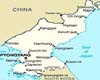
The same North Korean ICBM efforts that throw a rock at Alaska can throw a large nuclear warhead at every ally the United States has in Northeast Asia. Japan and South Korea are not only close allies, they are critical trading partners. |
|
|

| The content herein, unless otherwise known to be public domain, are Copyright 1995-2006 - SpaceDaily.AFP and UPI Wire Stories are copyright Agence France-Presse and United Press International. ESA PortalReports are copyright European Space Agency. All NASA sourced material is public domain. Additionalcopyrights may apply in whole or part to other bona fide parties. Advertising does not imply endorsement,agreement or approval of any opinions, statements or information provided by SpaceDaily on any Web page published or hosted by SpaceDaily. Privacy Statement |