|
 |
 |
 |
 |
 |
 |
 |
 |

 |
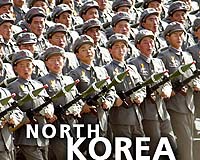
North Korea Losing Ground Militarily Says US Pacific Commander
Washington (AFP) Sep 22, 2006 North Korea's comparative military strength has dwindled to the point that it could not sustain an invasion of South Korea for long, the commander of US forces in the Pacific said Friday. "I'm hard pressed to come up with a rational rationale for an invasion of the south," Admiral William Fallon said. "The trend lines are just going in completely opposite directions day by day." Fallon suggested in a session with defense reporters here that the shifting balance of power on the Korean peninsula might allow for a further reduction of the US military presence on the ground in South Korea. The upbeat assessment comes despite continuing US concerns about Pyongyang's nuclear and missile programs, which Fallon said were "disconcerting." But, he said, the test failure July 5 of a North Korean long-range Taepodong-2 missile shows it will be "a while" before that threat fully materializes. "The fact that it failed, the fact that apparently the last time they did this a few years ago was also a failure, indicates some problems there," he said. "They've got work to do. And it seems to me before we can credibly give them capability, or signs of building, they have to demonstrate they can actually get a missile off the pad, and have it fly," he said. Fallon said North Korea has lost ground militarily both because of the growing strength of the South Korean military and the impact of sanctions and years of widespread starvation in the north. "As I look at their people, just the physical appearance of them, they appear year by year to be physically diminished," he said. "People are starving, there is not enough food, and so there's a physical problem." "Also there is also a major financial problem. We've been choking them financially from the outside," he said. Fallon said the North Korean military has some strengths such as it special warfare capabilities. "So I'm not going to discount this threat, but the ability for them to sustain major combat for a lengthy period of time I believe is much less than it was in the past, particularly given this growth in South Korean capability," he said. "Not only do they have well fed, well trained, well organized troops in the south, but they have had increasing exposure to new technology from us and other sources," he said. "North Korea would be very hard pressed to be successful for any period of time in an attack in the south," he said. Moreover, he said, South Korea is moving closer to the north because it wants a reunified peninsula. The US military for its part has been transferring key missions to the South Koreans, strengthening their ability to defend against an invasion by the north, he said. "My assessment is that the ROK (Republic of Korea) military is very capable of defending themselves now, particularly their ground forces," Fallon said. "They would clearly benefit from our assistance and engagement, particularly in air and naval. But their ground forces I think are very capable of defending South Korea," he said. Under agreements dating from the 1950-53 Korean War, a US general commands a combined US-South Korea force in wartime. But South Korea is pressing to take over full wartime operational control of forces in its territory. "Assuming that this topic is agreed for execution in some manner, then we'll have to go back and look at all those forces, and reassess that," he said. Current plans call for a reduction of US forces in South Korea to 25,000 by 2008 from 32,500 today. That will leave a US combat brigade and a "fair number" of US military personnel who are there to provide the staff structure for US troops flowing into the country in the event of an invasion, he said.
Source: Agence France-Presse Community Email This Article Comment On This Article Related Links Learn about nuclear weapons doctrine and defense at SpaceWar.com Learn about nuclear weapons doctrine and defense at SpaceWar.com Learn about missile defense at SpaceWar.com All about missiles at SpaceWar.com Learn about the Superpowers of the 21st Century at SpaceWar.com
 West Blocks Arab Push To Condemn Israeli Nuclear Activities
 Vienna (AFP) Sep 22, 2006
A bid by Arab nations to pass a resolution in the UN nuclear watchdog condemning Israel's nuclear activities failed Friday due to technical objections by Western countries. The draft resolution concerning "Israel's nuclear capacities and threats" was backed by 15 Arab countries -- along with Cuba, Indonesia, Iran, Malaysia and Venezuela -- at Friday's meeting of the International Atomic Energy Agency's (IAEA) general assembly in Vienna. |
|
|

| The content herein, unless otherwise known to be public domain, are Copyright 1995-2006 - SpaceDaily.AFP and UPI Wire Stories are copyright Agence France-Presse and United Press International. ESA PortalReports are copyright European Space Agency. All NASA sourced material is public domain. Additionalcopyrights may apply in whole or part to other bona fide parties. Advertising does not imply endorsement,agreement or approval of any opinions, statements or information provided by SpaceDaily on any Web page published or hosted by SpaceDaily. Privacy Statement |