|
 |
 |
 |
 |
 |
 |
 |
 |

 |
North Korea And US To Tackle Sanctions
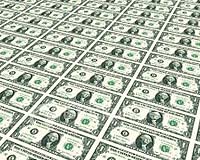
UPI Correspondent Seoul (UPI) Jan 29, 2007 Financial officials from North Korea and the United States are set to meet this week to discuss U.S. sanctions on the communist country, with rising hopes of a breakthrough over the key sticking point in the prolonged nuclear standoff. Analysts in Seoul say the results of the financial talks that will begin on Tuesday would determine the fate of the next round of six-nation nuclear talks expected to open during the second week of February. South Korean officials also voiced optimism about progress at this week's talks, saying Pyongyang and Washington were showing "flexibility" over the financial impasse. Daniel Glaser, Washington's chief envoy to the financial talks with North Korea, has arrived in China to meet his North Korean counterpart O Kwang Chol, president of the Foreign Trade Bank of Korea. Glaser is deputy assistant secretary for terrorist financing and financial crimes. The U.S. Treasury said Glaser would seek to address "the international community's concerns about illicit financial conduct, globally recognized standards for operating as a responsible member of the financial community and the financial measures taken by the United States to combat illicit financial flows." North Korea has been suspected of running a range of financial illegalities, such as counterfeiting U.S. bills and money laundering, to feed the country's military-heavy leadership and build weapons of mass destruction. Under Section 311 of the Patriot Act, the U.S. Treasury in September 2005 designated Banco Delta Asia, a Macau-based bank, as a "primary money laundering concern," which allegedly provided suspicious financial services to North Korea over the past decades. Under the U.S. measure, BDA has frozen $24 million of the North Korea's holdings in some 50 accounts and cut off transactions with the communist, which is believed to chock off Pyongyang's cash flow. In an angry response, the North had boycotted the six-party talks aimed at aimed at ending its nuclear arms drive, and launched a volley of missiles in July last year, including long-range weapons, which was followed by a bombshell underground nuclear test three months later. After the nuclear test, the North returned to the talks last month, ending its 13-month boycott, but it used the talks to call for the lifting of the U.S. financial sanctions, a demand rejected by Washington. In the face of mounting pressure, however, chief nuclear negotiators from North Korea and the United Sates met in Berlin earlier this week and reached "certain agreement" on the thorny financial issue. Under the agreement, financial negotiators from the two sides are to meet on Tuesday to discuss the U.S. financial crackdown. The financial talks come amid positive signs. According to news reports and diplomatic sources, North Korea is willing to halt the operation of a 5-megawatt reactor at the Yongbyon nuclear complex, and allow inspectors from the International Atomic Energy Agency to enter the country to confirm whether North Korea halts the operation. In return, the United States is reportedly considering unfreezing about $13 million in North Korean assets in the Macau bank. The U.S. move comes after South Korea has asked the United States to unfreeze "legitimate" North Korean bank accounts to resolve the nuclear standoff, according to diplomatic sources. In a press briefing last week, Seoul's Foreign Minister Song Min-soon called on the United States and North Korea to narrow their gaps on the financial issue, saying "one side of the financial dispute affects" progress in the long-stalled nuclear negotiation. Analysts here expect the North would be eager to reach an agreement at this week's talks because of its cash crunch in the wake of the U.S. financial crackdown and U.N.-backed sanctions. "The United States is also expected to seek progress in the face of mounting calls at home for maintaining dialogue momentum with North Korea following the victory for the U.S. Democrats in the midterm elections," said Paik Hak-soon, a North Korea expert at South Korea's private Sejong Institute.
Source: United Press International Community Email This Article Comment On This Article Related Links Learn about nuclear weapons doctrine and defense at SpaceWar.com Learn about nuclear weapons doctrine and defense at SpaceWar.com Learn about missile defense at SpaceWar.com All about missiles at SpaceWar.com Learn about the Superpowers of the 21st Century at SpaceWar.com
 Sonia Gandhi Says India Still Wants Global Nuclear Disarmament
 New Delhi (AFP) Jan 29, 2007
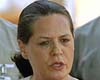
India's ruling Congress party chief Sonia Gandhi said Monday the country's nuclear arsenal was borne out of its "strategic compulsion" but renewed New Delhi's call for global disarmament. Her comments came during a conference celebrating the legacy of India's freedom champion Mahatma Gandhi, who chose non-violence as his tool to campaign against 300 years of British colonial rule. |
|
|

| The content herein, unless otherwise known to be public domain, are Copyright 1995-2006 - SpaceDaily.AFP and UPI Wire Stories are copyright Agence France-Presse and United Press International. ESA PortalReports are copyright European Space Agency. All NASA sourced material is public domain. Additionalcopyrights may apply in whole or part to other bona fide parties. Advertising does not imply endorsement,agreement or approval of any opinions, statements or information provided by SpaceDaily on any Web page published or hosted by SpaceDaily. Privacy Statement |