|
 |
 |
 |
 |
 |
 |
 |
 |

 |
Nobel Winner: Missile Defense Still Decades Away
Airlie VA (UPI) May 17, 2005 A comprehensive defense against nuclear missiles is still decades away, a Nobel Prize winning U.S. scientist said Tuesday. "If we could turn on overnight a completely effective missile defense system, I would be completely in favor of it, even if it cost hundreds of billions of dollars," Professor Steven Weinberg, winner of the 1979 Nobel Prize for Physics, told a conference on the militarization of space Tuesday. The two day conference held in Airlie, Va., was organized by the Nuclear Policy Research Institute. However, Weinberg described the current system being deployed in Alaska and elsewhere by the Bush administration to defend against a limited ICBM attack as "a system which has no capability at all." "There is no prospect" of an effective ABM system to defend the United States against ballistic missile attack for years, perhaps even decades, to come," he said. Weinberg is a physics professor at the University of Texas in Austin. Community Email This Article Comment On This Article Related Links Steven Weinberg's homepage SpaceDaily Search SpaceDaily Subscribe To SpaceDaily Express Learn about missile defense at SpaceWar.com Learn about nuclear weapons doctrine and defense at SpaceWar.com All about missiles at SpaceWar.com Learn about the Superpowers of the 21st Century at SpaceWar.com
 Missile Defense Program Moves Forward
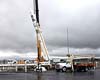 Washington DC (AFPS) Jan 12, 2006
The Missile Defense Agency continues to move forward in its efforts to protect the nation against a ballistic missile attack. The eighth ground-based interceptor missile was lowered into its underground silo at Fort Greely, Alaska, Dec. 18, 2005. |
|
|

| The content herein, unless otherwise known to be public domain, are Copyright 1995-2006 - SpaceDaily.AFP and UPI Wire Stories are copyright Agence France-Presse and United Press International. ESA PortalReports are copyright European Space Agency. All NASA sourced material is public domain. Additionalcopyrights may apply in whole or part to other bona fide parties. Advertising does not imply endorsement,agreement or approval of any opinions, statements or information provided by SpaceDaily on any Web page published or hosted by SpaceDaily. Privacy Statement |