|
 |
 |
 |
 |
 |
 |
 |
 |

 |
Next-Generation Tracking Will Change Supply Chain Management
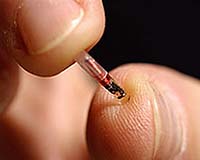
UPI Technology Columnist Chicago (UPI) Jul 13, 2006 The second generation of wireless package tracking technology -- radio frequency identification (RFID) gear -- is emerging rapidly, changing the way manufacturers monitor shipments. Paper maker Smurfit-Stone Container Corp. is working with Texas Instruments Inc., the electronics developer, to bring to market a new process for affixing straps to boxes, which contain printed antennae. The antennae are printed directly on the corrugated box -- eliminating one step in the process of attaching the tracking technology and reducing the overall cost of using it in so-called supply-chain management. A supply chain is an industry term for a series of smaller manufacturers who supply parts for a larger firm, which ultimately ships the completed product to yet another outfit, like a retailer. A number of consumer products goods (CPG) manufacturers are expressing an interest in using the boxes, possibly increasing the speed at which they can ship products to stores. "Speed and flexibility continue to be crucial," said Tony Sabetti, director of the ultra-high frequency retail supply chain project at Texas Instruments, based in suburban Dallas, as companies seek to "convert process technology in the supply chain." The technology, being used by some retailers, like Wal-Mart and Walgreens, is also changing merchandising, impacting product placement in stores and helping managers track foot traffic within stores, so as to improve the placement of related products, and ease their purchase, according to a recent white paper on the subject by Kanbay International. These technologies are being used by visionaries and early adopters now, but, in the coming years, the tools will breach the chasm and hit the mainstream market, where pragmatists, conservatives, and even today's skeptics will embrace it. A recent study by the University of Arkansas showed that RFID technologies reduced out-of-stock item complaints by 16 percent in one pilot program. The technology that is enabling this trend is quite fascinating -- an integrated circuit (IC) and two conducting pads that are connected to a conductive antenna that is printed on packaging materials, or even on the face of an adhesive label. When printed on labels, the technology can be dispensed from a continuous, reel-to-reel format. Right now, many in the industry consider the technology to be early stage, suitable for testing and development, said Dr. Joseph LeBlanc, vice president of Smurfit-Stone Container, based in Chicago. The company is continuing the development of the so-called Tag It technology, he added. Other developers are moving along with cutting-edge, wireless applications. Symbol Technologies Inc. disclosed that it was moving forward with plans for a networking technology that will enable businesses to manage RFID devices on a WiFi network, just like they manage other devices, like computers and mobile phones. The technology is called the Wireless Next Generation, or WiNG, architecture. The idea is to enable companies to "capture data, move the information on a WiFi network, and securely manage the entire system," said Anthony Bartolo, vice president and general manager of Symbol's wireless and RFID divisions. Customers like British Petroleum are using the networks already. "The integration of current and emerging RF communications for large industrial sites could yield greater efficiencies for business operations," said Mike Haley, chief technology officer of BP. Other companies -- in the pharmaceutical industry, for example -- are embracing the technology too. Simply put, RFID is providing manufacturers with the data they need from the shop floor to "analyze opportunities for improvement," Mike Newkirk, a manufacturing industry strategist for SAS, told Wireless World. "Standards -- technical issues -- and return on investment -- business issues -- are the big barriers in manufacturing, but they will come around and pretty soon, I think." Gene Koprowski is a 2006 Winner for UPI of a National Institutes of Health Medicine in the Media Fellowship at Dartmouth College.
Source: United Press International Community Email This Article Comment On This Article Related Links GPS Applications, Technology and Suppliers GPS Applications, Technology and Suppliers
 Difficult Road Ahead For Russian Space Navigation
 Moscow, Russia (RIA) Jul 13, 2006
The Russian satellite navigation system, which, as the name suggests, monitors ship and air traffic, is itself in need of effective state monitoring. |
|
|

| The content herein, unless otherwise known to be public domain, are Copyright 1995-2006 - SpaceDaily.AFP and UPI Wire Stories are copyright Agence France-Presse and United Press International. ESA PortalReports are copyright European Space Agency. All NASA sourced material is public domain. Additionalcopyrights may apply in whole or part to other bona fide parties. Advertising does not imply endorsement,agreement or approval of any opinions, statements or information provided by SpaceDaily on any Web page published or hosted by SpaceDaily. Privacy Statement |