
 |
 |
 |
 |
 |
 |
 |
 |
 |

 |
New, smaller satellites are developed
Ann Arbor, Mich. (UPI) Oct 8, 2008 U.S. scientists say they are developing a satellite about the size of a loaf of bread that will be deployed to study space weather. The National Science Foundation-funded project called Radio Explorer, or RAX, is being led by the University of Michigan and the SRI International Corp., a California independent research and technology development organization. The satellite, called CubeSat, is to be the first free-flying spacecraft, and will be built, in part, by members of the university's Student Space Systems Fabrication Laboratory. CubeSats are approximately 4-inch cube-shaped devices that launch from inside a P-Pod -- a special rocket attachment developed by California Polytechnic State University and Stanford University. The RAX satellite will essentially be made of three CubeSats and will measure the energy flow in the Earth's ionosphere, where solar radiation turns regular atoms into charged particles. "This project will help us better understand space weather processes, how the Earth and sun interact and how this weather produces noise in space communication signals -- noise that translates to lower quality telecommunications capabilities and error in GPS signals," said Assistant Professor James Cutler, a co-principal investigator with physicist Hasan Bahcivan of SRI. RAX is scheduled for launch in December. Community Email This Article Comment On This Article Share This Article With Planet Earth
Related Links Microsat News and Nanosat News at SpaceMart.com
 ISIS To Develop Star Tracker For Nanosatellites
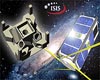 Delft, Netherlands (SPX) Oct 07, 2008
ISIS - Innovative Solutions In Space has been awarded a phase-II Small Business Innovation Research (SBIR) contract by the Dutch research institute TNO to develop a prototype for a star tracker for nanosatellite applications. |
|
|

| The content herein, unless otherwise known to be public domain, are Copyright 1995-2007 - SpaceDaily.AFP and UPI Wire Stories are copyright Agence France-Presse and United Press International. ESA Portal Reports are copyright European Space Agency. All NASA sourced material is public domain. Additional copyrights may apply in whole or part to other bona fide parties. Advertising does not imply endorsement,agreement or approval of any opinions, statements or information provided by SpaceDaily on any Web page published or hosted by SpaceDaily. Privacy Statement |
 del.icio.us
 Digg
Digg Reddit
 YahooMyWeb
 Google
 Facebook