
 |
 |
 |
 |
 |
 |
 |
 |
 |

 |

Vienna (AFP) July 23, 2010 The 18th council of war on AIDS has opened up new fronts in a nearly three-decade-old campaign but in the grim awareness that a battle-hardened enemy -- the money crunch -- is back. The 20,000 clinicians, policymakers and grassroots workers who attended the International AIDS Conference, which ended here Friday, were strengthened by the most encouraging news in years. Tests among volunteers in South Africa showed that a vaginal gel laced with an HIV-drug could help protect women against the AIDS virus. If confirmed in further work -- and probably fine-tuned to boost its effectiveness -- the microbicide would join the condom and male circumcision in protecting against the human immunodeficiency virus (HIV). "We have shifted gears," said France's 2008 Nobel laureate, Francoise Barre-Sinoussi, who in 1983 helped identify HIV as the cause of AIDS. "We now have a tool kit for preventing HIV, including antiretroviral drugs, and microbicides are emerging, with encouraging results on this front for the first time. "The task is to use these tools to reduce the spread and rate of infection in the coming years." At least 25 million people have been killed by acquired immune deficiency syndrome (AIDS) since 1981. More than 33 million people are living with HIV, which causes the disease, and new infections are occuring at the rate of around two million a year. New objectives were set in treating patients with the famous "cocktail" of drugs that prevent HIV from replicating uncontrolled in immune cells, exposing the body to fatal opportunistic infections. After a long study, the UN's World Health Organisation (WHO) declared the therapy was safer and more effective than before, and issued guidelines for patients to be treated sooner after becoming infected. The agency UNAIDS, meanwhile, unveiled a strategy for simpler treatment administered by lower-cost health procedures. In the realm of fundamental science, researchers ended a years-long taboo by asking this question: Could there be a cure for HIV? They agreed to work together to explore ways of attacking the "reservoir," or bolthole, where HIV hides, at currently undetectable levels, after being repressed by drugs. Around 5.2 million badly-infected poor people have access to the pharmacological lifeline that has turned HIV to a manageable, if chronic, disease. But this is only between a third and a half of those who need the therapy, and millions more who will no doubt join them in the years to come. The bill for this lifelong therapy is rising relentlessly, and worries about funding, which for several years had been relatively dormant, are back. New figures issued at the six-day forum showed western donors in 2009 contributed less than in 2008, making it the first annual decline in six years. In 2009, the gap between needs and funding from all sources was 7.7 billion dollars, and so far, in 2010 -- the year when the Group of Eight (G8) pledged universal access to AIDS drugs for all -- the shortfall is more than 11 billion. Michel Kazatchkine, executive director of the Global Fund to Fight AIDS, TB and Malaria, pleaded with donor countries to hold the line. He urged the introduction of a micro-tax on financial transactions to raise precious money and said it was time for fast-growing emerging economies, led by China and India, to open their wallets for the worldwide war chest. Without funds, a dark future loomed for those waiting to grasp the lifeline, said Kazatchkine. "When they arrive at AIDS clinics, they will have to be told, 'Put your name on the waiting list. As soon as we get the drugs, we'll get back to you.' But when that day comes around, they will already be dead." "International governments say we face a crisis of resources, but that is simply not true," said Julio Montaner, director of the BC Centre for Excellence in HIV/AIDS in Vancouver, Canada, who chaired the conference. "When there is a Wall Street emergency or an energy crisis, billions upon billions of dollars are quickly mobilized."
Share This Article With Planet Earth
Related Links Epidemics on Earth - Bird Flu, HIV/AIDS, Ebola

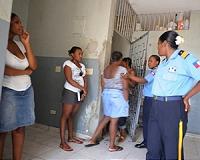 Prisons emerge as hotspots for AIDS pandemic
Vienna (AFP) July 22, 2010 Prisons are excellent breeding grounds for HIV, enabling the AIDS virus to propagate swiftly and stealthily, yet many options exist for tackling the problem, the world AIDS conference heard. Incidence of the human immunodeficiency virus (HIV) runs far higher among the 30 million people in the world's penitentiaries than in the general population, according to the UN Office on Drugs and Crime ... read more |
|
|
| The content herein, unless otherwise known to be public domain, are Copyright 1995-2010 - SpaceDaily. AFP and UPI Wire Stories are copyright Agence France-Presse and United Press International. ESA Portal Reports are copyright European Space Agency. All NASA sourced material is public domain. Additional copyrights may apply in whole or part to other bona fide parties. Advertising does not imply endorsement,agreement or approval of any opinions, statements or information provided by SpaceDaily on any Web page published or hosted by SpaceDaily. Privacy Statement |


 del.icio.us
 Digg
Digg Reddit
 YahooMyWeb
 Google
 Facebook


