|
 |
 |
 |
 |
 |
 |
 |
 |

 |
New Technology Will Speed Genome Sequencing
Boston - Nov 25, 2003 Almost 150 different genomes have been sequenced to date, including the human genome. But sequencing needs are growing faster than ever: In March 2003, the Bush administration announced it will spend $1 billion over five years to increase forensic analysis of DNA, including a backlog of up to 300,000 samples. And the success of the growing field of genomic medicine, which promises to deliver better therapies and diagnostics, depends on faster sequencing technology. This fall, researchers at Whitehead Institute will test new technology that could aid these and other endeavors. The BioMEMS 768 Sequencer can sequence the entire human genome in only one year, processing up to 7 million DNA letters a day, about seven times faster than its nearest rival. Scientists began working on the project in 1999 with a $7 million National Human Genome Research Institute grant. The technology eventually will help scientists quickly determine the exact genetic sequence of the DNA of many different organisms, and could lead to faster forensic analysis of DNA gathered in criminal cases. The heart of the new BioMEMs machine is a large glass chip etched with tiny microchannels called "lanes." It tests 384 lanes of DNA at a time, four times more than existing capillary sequencers. Each lane can accommodate longer strands of DNA: about 850 bases (the nucleic acids found in DNA, abbreviated by the letters A, C, T or G), compared to the current 550 bases per lane. It takes about 45 minutes to read the DNA from one of the BioMEMS' 768 lanes. The machine has two chips; one is prepared as the other is sequenced, so that the machine is sequencing at all times. The new sequencer saves not just capital costs, the developers say, but day-to-day expenses as well. "It's not only the cost of the machine, but the cost of the materials it uses," says Brian McKenna, a senior software engineer at Whitehead Institute. The goal, he says, is to use the same amount of consumables -- liquid, chemicals, and other materials used to prepare the DNA -- as existing sequencing machines. BioMEMS also uses a DNA loading process that eventually will need only 1 percent of a typical DNA sample. While developed at Whitehead, the machine is being commercialized by network biosystems, a company in Woburn, Mass., started in 2001 by Whitehead Member Paul Matsudaira, BioMEMS Labs Director Dan Ehrlich and research scientist Lance Koutny. Shimadzu Biotech in Japan will manufacture the sequencer. Community Email This Article Comment On This Article Related Links Whitehead Institute for Biomedical Research SpaceDaily Search SpaceDaily Subscribe To SpaceDaily Express Space Medicine Technology and Systems
 Genomic Sequences Processed In Minutes, Rather Than Weeks
 Richland WA (SPX) Jun 22, 2005
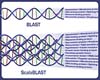
A new computational tool developed at the Department of Energy's Pacific Northwest National Laboratory is speeding up our understanding of the machinery of life - bringing us one step closer to curing diseases, finding safer ways to clean the environment and protecting the country against biological threats. |
|
|

| The content herein, unless otherwise known to be public domain, are Copyright 1995-2006 - SpaceDaily.AFP and UPI Wire Stories are copyright Agence France-Presse and United Press International. ESA PortalReports are copyright European Space Agency. All NASA sourced material is public domain. Additionalcopyrights may apply in whole or part to other bona fide parties. Advertising does not imply endorsement,agreement or approval of any opinions, statements or information provided by SpaceDaily on any Web page published or hosted by SpaceDaily. Privacy Statement |