|
 |
 |
 |
 |
 |
 |
 |
 |

 |
New Technique May Speed Development of Molecular Electronics
New York NY (SPX) Jul 27, 2007 Often, things can be improved by a little "contamination." Steel, for example, is iron with a bit of carbon mixed in. To produce materials for modern electronics, small amounts of impurities are introduced into silicon - a process called doping. It is these impurities that enable electricity to flow through the semiconductor and allow designers to control the electronic properties of the material. Scientists at the Weizmann Institute of Science, together with colleagues from the U.S., recently succeeded in being the first to implement doping in the field of molecular electronics - the development of electronic components made of single layers of organic (carbon-based) molecules. Such components might be inexpensive, biodegradable, versatile, and easy to manipulate. The main problem with molecular electronics, however, is that the organic materials must first be made sufficiently pure, and then ways must be found to successfully dope these somewhat delicate systems. This is what Prof. David Cahen and postdoctoral fellow Dr. Oliver Seitz of the Weizmann Institute's Material and Interfaces Department, together with Drs. Ayelet Vilan and Hagai Cohen from the Chemical Research Support Unit and Prof. Antoine Kahn from Princeton University, did. They showed that such contamination is indeed possible, after they succeeded in purifying the molecular layer to such an extent that the remaining impurities did not affect the system's electrical behavior. The scientists doped the "clean" monolayers by irradiating the surface with ultraviolet (UV) light or weak electron beams, changing chemical bonds between the carbon atoms that make up the molecular layer. These bonds ultimately influenced electronic transport through the molecules. This achievement was recently described in the Journal of the American Chemical Society. The researchers foresee that this method may enable scientists and electronics engineers to substantially broaden the use of these organic monolayers in the field of nanoelectronics. Dr. Seitz: "If I am permitted to dream a little, it could be that this method will allow us to create types of electronics that are different, and maybe even more environmentally friendly, than the standard ones that are available today." Prof. David Cahen's research is supported by the Nancy and Stephen Grand Research Center for Sensors and Security; the Philip M. Klutznick Fund for Research; Mr. Yehuda Bronicki, Israel; Mr. and Mrs. Yossie Hollander, Israel; and the Wolfson Family Charitable Trust. Prof. Cahen is the incumbent of the Rowland Schaefer Professorial Chair in Energy Research. Community Email This Article Comment On This Article Related Links Weizmann Institute of Science Computer Chip Architecture, Technology and Manufacture Nano Technology News From SpaceMart.com
 Graphene Nanoelectronics Making Tomorrow Computers From A Pencil Trace
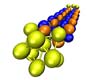 Troy, NY (SPX) Jul 25, 2007
A key discovery at Rensselaer Polytechnic Institute could help advance the role of graphene as a possible heir to copper and silicon in nanoelectronics. Graphene, a one-atom-thick sheet of carbon, eluded scientists for years but was finally made in the laboratory in 2004 with the help of everyday, store-bought clear adhesive tape. Graphite, the common material used in most pencils, is made up of countless layers of graphene. Researchers simply used the gentle stickiness of tape to break apart these layers. |
|
|

| The content herein, unless otherwise known to be public domain, are Copyright 1995-2006 - SpaceDaily.AFP and UPI Wire Stories are copyright Agence France-Presse and United Press International. ESA PortalReports are copyright European Space Agency. All NASA sourced material is public domain. Additionalcopyrights may apply in whole or part to other bona fide parties. Advertising does not imply endorsement,agreement or approval of any opinions, statements or information provided by SpaceDaily on any Web page published or hosted by SpaceDaily. Privacy Statement |