|
 |
 |
 |
 |
 |
 |
 |
 |

 |
New Tactical Wireless Emergency Broadband Network Introduced
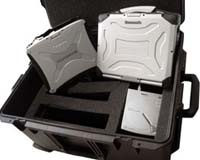
Lake Mary FL (SPX) Nov 23, 2005 F4W has announced the release of the Tactical Wireless Emergency Broadband (TWEB) Incident Area Command Control Network. These rapid-deploy, self-forming networks can be used by first and supplemental responders to immediately fill communication gaps that result from loss of traditional infrastructure and communications. The TWEB Incident Area Command Control Network (IACC) is the next generation of field command and control. The IACC controls a self-forming incident area wireless network that can cover a city block or scale to hundreds of square miles. The incident area network can provide access to vital data, video and VoIP communication within the incident area even if all existing infrastructure has been destroyed. The IACC can establish a broadband satellite connection within 10 minutes of its deployment to create a link to remote data, video and VoIP anywhere in the world. "The TWEB Incident Area Command Control Network is simple to use, easy to deploy and can provide instant communications for disaster relief in any setting and under the most extreme circumstances," said Keith Money, COO of F4W, "combined with our Tactica communications software, emergency responders now have a set of real-time collaboration tools where once there were no options for communications within devastated areas." The IACC's communications interoperability provides first and supplemental responders the ability to communicate across disciplines and jurisdictions via wireless communications systems, exchanging voice and/or data with one another on demand, in real time, when needed. Harry Timmons, President of F4W, said, "Our IACC networks provide highly secure communications interoperability with any communications system, worldwide. Working with the United States Coast Guard in hurricane-ravaged areas of Florida, Mississippi, Texas and Louisiana, our IACC Network succeeded where traditional phone lines, cell phones and public safety radio services were unavailable. F4W is able to provide reliable, wireless broadband voice, video and data networks in remote locations and under extreme circumstances. The networks are deployed in minutes, not days." The IACC's interoperability provides the local TWEB connection with any system or network throughout the world as well as other TWEB IACC Networks. In support of search and rescue missions following Hurricane Katrina where no other communications options were available, IACC Network's connectivity allowed the U.S. Coast Guard to establish communications between five different TWEB locations in the disaster area and the U.S. Coast Guard Operations Center in Martinsburg, West Virginia. The Tactica Communications Platform software provides users a common set of tools such as text messaging, Voice over IP (VoIP), Video over IP and file transfer designed to enable secure and easy collaboration with team members, associates, customers, and company resources - anytime, anywhere - using virtually any wireless or wired method of communication. Tactica's design enables it to function either in the absence of a server, or with the Tactica Enterprise Server providing the freedom and flexibility to communicate in virtually any environment. Community Email This Article Comment On This Article Related Links F4W SpaceDaily Search SpaceDaily Subscribe To SpaceDaily Express Bringing Order To A World Of Disasters A world of storm and tempest When the Earth Quakes
 ISRO Developing Ocean Bottom Warning Sensors
 Bangalore, India (SPX) Jan 11, 2006
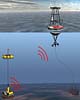
Indian Space Research Organisation is developing ocean bottom sensors that will help warn tsunami strikes in advance, the Press Trust Of India reports. |
|
|

| The content herein, unless otherwise known to be public domain, are Copyright 1995-2006 - SpaceDaily.AFP and UPI Wire Stories are copyright Agence France-Presse and United Press International. ESA PortalReports are copyright European Space Agency. All NASA sourced material is public domain. Additionalcopyrights may apply in whole or part to other bona fide parties. Advertising does not imply endorsement,agreement or approval of any opinions, statements or information provided by SpaceDaily on any Web page published or hosted by SpaceDaily. Privacy Statement |