|
 |
 |
 |
 |
 |
 |
 |
 |

 |
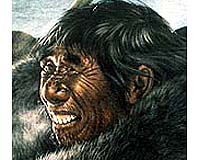
New Study Shows Neanderthals Were Not Our Ancestors
New York - Jan 29, 2004 In the most recent and mathematically rigorous study to date determining whether Neanderthals contributed to the evolution of modern humans, a team of anthropologists examining the skulls of modern humans and Neanderthals as well as 11 existing species of non-human primates found strong evidence that Neanderthals differ so greatly from Homo sapiens as to constitute a different species. The findings could potentially put to rest the decades-long debate between proponents of the regional continuity model of human origins, which maintains that Neanderthals are a subspecies of Homo sapiens which contributed significantly to the evolution of modern Europeans, and the single-origin model, which views Neanderthals as a separate, distinct species. The research will be published in the Proceedings of the National Academy of Sciences. The scientists, led by Katerina Harvati of New York University, used a new technique known as geometric morphometrics to measure the degree of variation between and amongst living primate species, represented by over 1000 specimens. The scientists measured 15 standard craniofacial landmarks on each of the skulls and used 3-D analysis to superimpose each one in order to measure their shape differences, irrespective of size. Random samples were chosen from each species and the differences between them were calculated 10,000 times, in order to simulate the sampling effects of the fossil record. The data used included Neanderthal fossils , Upper Paleolithic European modern human fossils, and recent human populations, as well as data from living African apes and Old World Monkeys. "Our motivation was to devise a quantitative method to determine what degree of difference justified classifying specimens as different species," said Harvati. "The only way we could effectively do this was to examine the skeletal morphology of living species today and come up with models. From these data, we were able to determine how much variation living primate species generally accommodate, as well as measure how different two primate species that are closely related can be." The study found that the differences measured between modern humans and Neanderthals were significantly greater than those found between subspecies or populations of the other species studied. The data also showed that the difference between Neanderthals and modern humans was as great or greater than that found between closely related primate species. Among the species of existing primates included in the study were gorillas and chimpanzees, which are known to be the closest relatives to humans, as well as mandrills, macaques and baboons, who represent a greater degree of geographic and ecological diversity. As a result, Harvati's team's study constitutes the most extensive inter- and intra-species comparison of primate evolution ever recorded. "What the data give us is a robust analysis of a widely representative sample of primates, and provides the most concrete evidence to date that Neanderthals are indeed a separate species within the genus Homo," Harvati added. The PNAS paper, entitled "Neanderthal taxonomy reconsidered: Implications of 3D primate models of intra- and interspecific differences," was co-authored by Stephen R. Frost of New York College of Osteopathic Medicine at the New York Institute of Technology and Kieran P. McNulty of Baylor University, and will be available on their website the week of January 26-30, 2004. Community Email This Article Comment On This Article Related Links New York University SpaceDaily Search SpaceDaily Subscribe To SpaceDaily Express Dirt, rocks and all the stuff we stand on firmly
 Magnetic Reconnection Region Larger Than 2.5 Million Km Found In The Solar Wind
 Paris (ESA) Jan 12, 2006
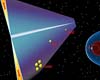
Using the ESA Cluster spacecraft and the NASA Wind and ACE satellites, a team of American and European scientists have discovered the largest jets of particles created between the Earth and the Sun by magnetic reconnection. This result makes the cover of this week's issue of Nature. |
|
|

| The content herein, unless otherwise known to be public domain, are Copyright 1995-2006 - SpaceDaily.AFP and UPI Wire Stories are copyright Agence France-Presse and United Press International. ESA PortalReports are copyright European Space Agency. All NASA sourced material is public domain. Additionalcopyrights may apply in whole or part to other bona fide parties. Advertising does not imply endorsement,agreement or approval of any opinions, statements or information provided by SpaceDaily on any Web page published or hosted by SpaceDaily. Privacy Statement |