|
 |
 |
 |
 |
 |
 |
 |
 |

 |
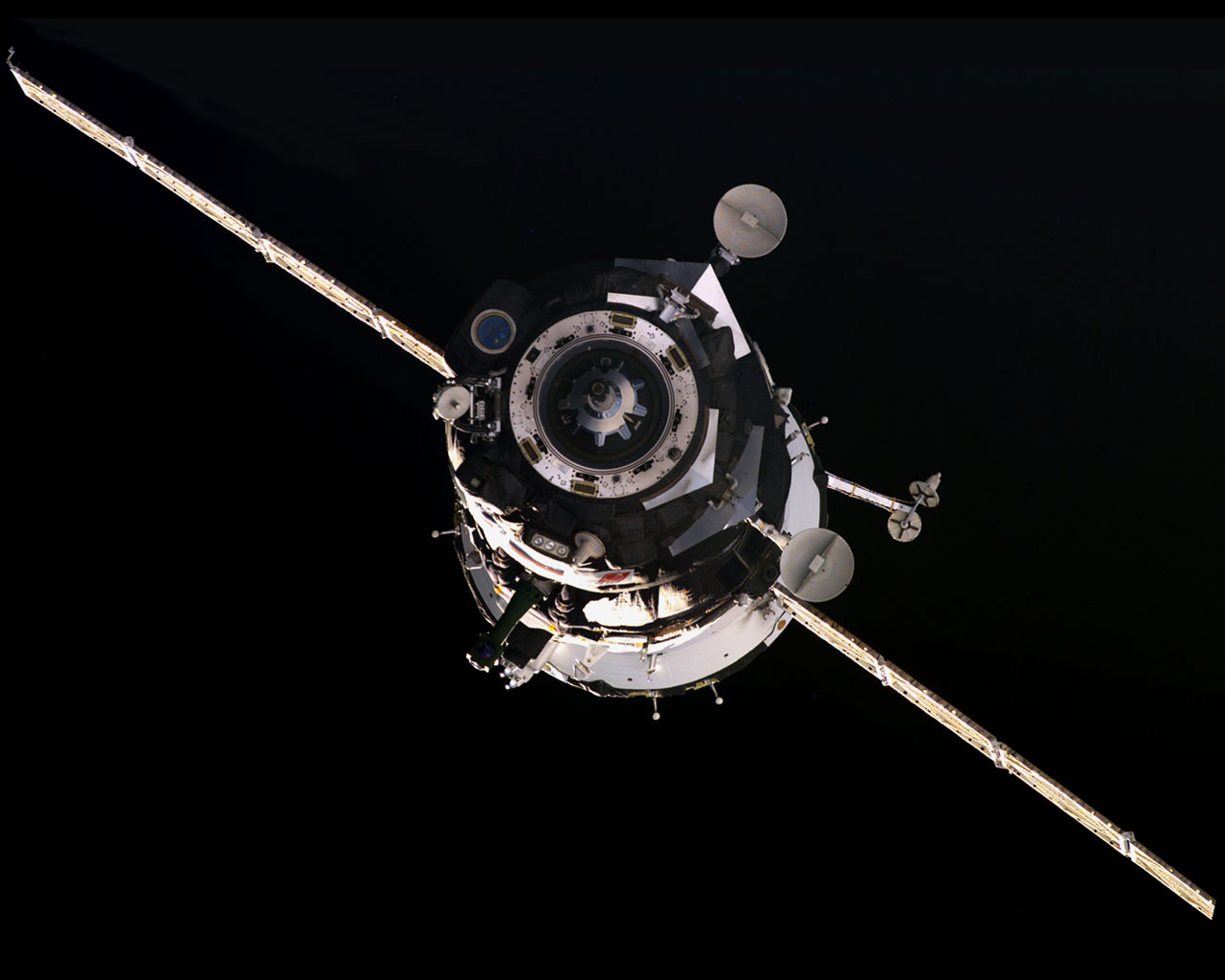
New Soyuz TMA Cleared For Next Mission With ESA Astronaut
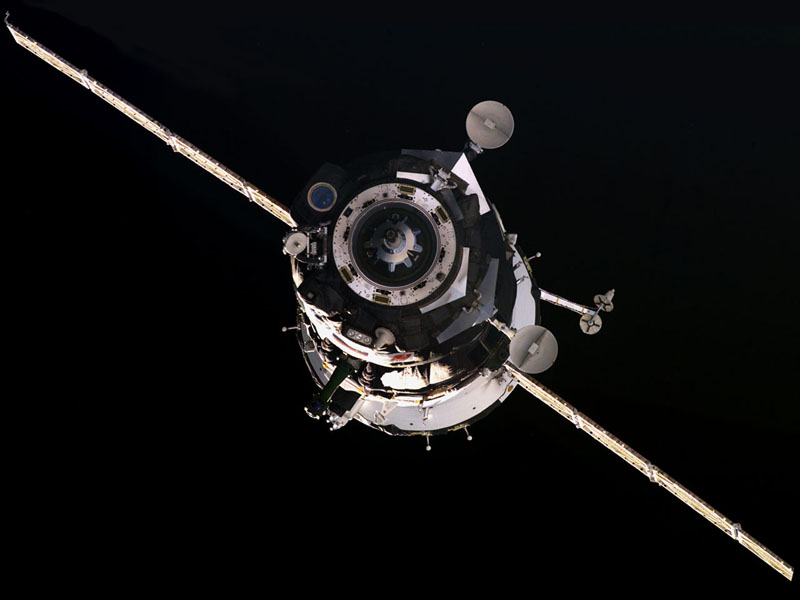
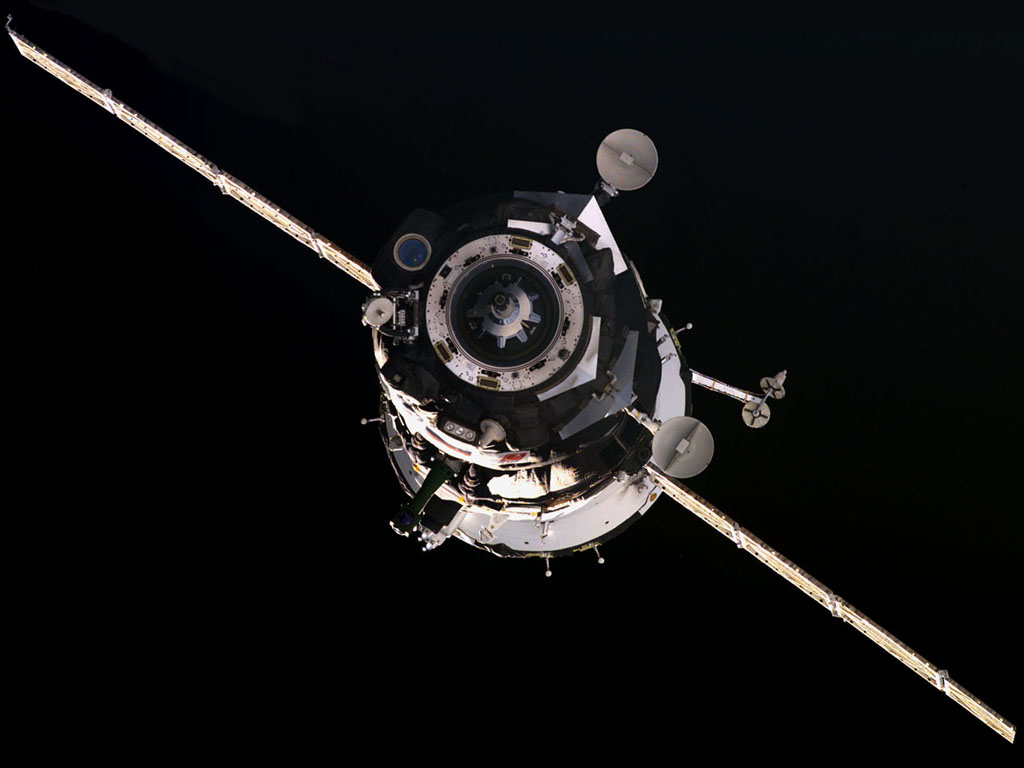
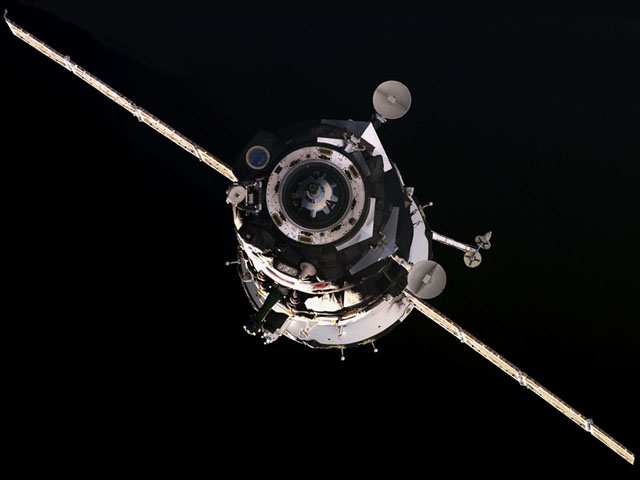
Moscow - Jun 09, 2003 The new Soyuz TMA spacecraft, which will carry ESA astronaut Pedro Duque to the ISS and back in October 2003, has been fully approved for operations. This follows previous announcements by Nikolai Zelenshikov, First Deputy President of RSC Energia, at an official briefing in Moscow on 26 May to present the findings of the enquiry commission's investigation of last month's ballistic re-entry by Soyuz TMA-1. The maiden flight of the new series by the Soyuz TMA-1 spacecraft was launched from the Baikonur Cosmodrome in Kazakhstan on 30 October 2002. The crew consisted of ESA astronaut Frank De Winne from Belgium and Russian cosmonauts Sergei Zaletin and Yuri Lonchakov. After completion of his mission tasks on the ISS, Frank De Winne returned to Earth in a Soyuz TM-34, one of the previous series of Soyuz spacecraft. Soyuz TMA-1 remained at the ISS to act as the station�s 'lifeboat� for six months, thereafter executing the first re-entry by a TMA on its return to Earth on 4 May 2003 with the ISS Expedition 6 crew, Russian cosmonaut Nikolai Budarin and American astronauts Kenneth Bowersox and Donald Pettit, after completing their 162-day mission aboard the station. Despite the unplanned re-entry in what is known as 'ballistic� mode, all the new systems used within the Soyuz TMA-1 spacecraft performed according to plan, including, in particular, the new soft-landing system, which incorporates new engines and a new frame. This reduces the landing shock from 12g in the old Soyuz TM series to 5g in the Soyuz TMA family. The Soyuz TMA-1 parachutes also functioned correctly. The problem, which caused Soyuz TMA-1 to perform the re-entry in ballistic mode and land 150 km north of Baikonur 400 km short of the intended landing site, was due to a failure in the BUSP-M guidance system, which is necessary in order to carry out a controlled re-entry. This guidance system reads gyroscopes and accelerometers and sends appropriate commands to attitude control thrusters. The yaw control channel, a sub-unit of the BUSP-M produced 'undefined� readings, indicating a malfunction. This caused higher control functions to take the BUSP-M system out of the control loop and convert to the ballistic re-entry mode. In this mode of re-entry the trajectory is steeper than in a controlled re-entry and the capsule rotates around its axis of trajectory to increase stability. The steeper trajectory reduces flight time and increases deceleration. This had the effect of applying an 8g gravity load to the crew of Soyuz TMA-1 as compared to a maximum of 6g in a controlled re-entry mode. The BUSP-M guidance system, where the problem occurred, first flew on Soyuz T-5 in 1979 and has since executed 49 faultless controlled re-entries. Tests as part of the official commission�s enquiry, which was set up following the return of Soyuz TMA-1, could not find any problems with the guidance unit. The problem could only be reproduced through mathematical simulation. The chance of this problem occurring has been determined to be about one in 7000. This is only the third time in the history of the Soyuz programme that such a mode of re-entry has occurred, though the ballistic mode is one of four nominal re-entry modes that the Soyuz T, TM and TMA capsules could employ under different conditions. The others are the automatic and manual control modes, and a back-up ballistic mode. The enquiry commission concluded that there is no need to modify Soyuz TMA-2. This is the 'lifeboat�, which is currently stationed at the ISS and is due to bring ESA's Spanish astronaut Pedro Duque back to Earth after completion of his mission later this year. Duque will be flying to the ISS in Soyuz TMA-3 in October. Certain modifications will be made to this capsule as recommended by the official enquiry commission. The first of these recommendations was to improve communications capability by including a mobile satellite telephone in the return capsule. This will be implemented immediately on Soyuz TMA-2 and the telephone is to be transported to the ISS by an unmanned Progress vehicle. The incorporation of a satellite communications capability such as Cospas-Sarsat is also recommended in the longer term. Secondly, modifications will be made to reduce the chances of incorrect commands by crew members to an absolute minimum. The Expedition 6 crew switched on the KURS rendezvous/docking system by mistake during the re-entry procedure, though it is confirmed that this did not result in the switch to ballistic mode. Nikolai Zelenshikov also addressed some questions concerning the length of time it took to locate the Soyuz TMA-1 capsule and crew after re-entry, which was longer than expected but within the regulation recovery period of three hours. The Russian mission control centre in Moscow and the search plane, which was flying over the expected landing area in Kazakhstan, were not aware that a ballistic re-entry had taken place even though there was radio contact with the Expedition 6 crew before the landing; the crew had not mentioned the mode of re-entry in their discussions with the ground teams. This led the search plane and helicopters to search the expected landing area first rather than the ballistic re-entry landing area. When they found nothing the recovery crew concluded that a ballistic mode re-entry had taken place and proceeded to the corresponding landing area 400 km away. After landing, it seems that mistakes were made in certain procedures, with the result that the onboard antennas were not deployed and the radio signalling was not switched to an external transmitter once the crew had erected an antenna outside the capsule. This added to the delay in locating the crew. When the recovery team arrived, the Soyuz crew had left the capsule by their own means. To avoid any recurrence of these procedural problems, there are further recommendations on revision of onboard documentation of procedures and additional training for future Soyuz TMA crews. "Though recommendations have been made for improvements for future flights, they have no bearing on the systems of the new Soyuz TMA series of spacecraft," said ESA Director of Human Spaceflight, J�rg Feustel-B�echl, commenting on the Russian enquiry commission�s findings. "I am happy that the way is now clear for the next Soyuz mission in October, the crew for which includes ESA astronaut Pedro Duque. This will be a mission to relieve the ISS crew and to perform scientific, technological and educational experiments. The exact time and date of this launch will depend upon ISS orbital parameters and operating status." Community Email This Article Comment On This Article Related Links Energia SpaceDaily Search SpaceDaily Subscribe To SpaceDaily Express Space Station News at Space-Travel.Com
 NASA Had No Choice But To Buy Soyuz Flights
 Washington DC (SPX) Jan 09, 2006
NASA's announcement last week that it will pay Roskosmos $43.6 million for a round-trip ride to the International Space Station this spring, and an equivalent figure for an as-yet-undetermined number of future flights to the station until 2012, represents the agency's acknowledgment that it had no alternative. |
|
|

| The content herein, unless otherwise known to be public domain, are Copyright 1995-2006 - SpaceDaily.AFP and UPI Wire Stories are copyright Agence France-Presse and United Press International. ESA PortalReports are copyright European Space Agency. All NASA sourced material is public domain. Additionalcopyrights may apply in whole or part to other bona fide parties. Advertising does not imply endorsement,agreement or approval of any opinions, statements or information provided by SpaceDaily on any Web page published or hosted by SpaceDaily. Privacy Statement |