
 |
 |
 |
 |
 |
 |
 |
 |
 |

 |
New Report Available On Ecosystems And Climate Change
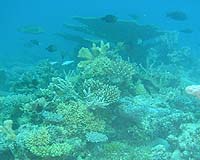
Washington DC (SPX) Jul 02, 2008 The U.S. Environmental Protection Agency has released a report that can help reduce the potential impact of climate change on estuaries, forests, wetlands, coral reefs, and other sensitive ecosystems. The report, entitled Preliminary Review of Adaptation Options for Climate-Sensitive Ecosystems and Resources, identifies strategies to protect the environment as these changes occur. "People always say 'Don't just tell us what will happen - tell us what we can do about it,'" said Dr. George Gray, assistant administrator for EPA's Office of Research and Development. "By using the strategies outlined in this document, we can help managers protect our parks, rivers, and forests from possible future impacts of a changing climate." To develop this assessment, scientists studied national parks, national forests, national wildlife refuges, wild and scenic rivers, national estuaries, and marine protected areas - all protected by the federal government. The report takes a unique approach by using the management goals set for each protected area to understand what strategies will increase the resilience of each ecosystem - in other words, increase the amount of change or disturbance that an ecosystem can absorb before it shifts to a different ecosystem. Using these strategies, managers can maintain the original goals set for these ecosystems under changing climatic conditions. The strategies will be useful to federal agencies and can also be broadly applied to lands and waters managed by other government or nongovernmental organizations. The report finds that climate change can increase the impact of traditional stressors (such as pollution or habitat destruction) on ecosystems, and that many existing best management practices to reduce these stressors can also be applied to reduce the impacts of climate change. For example, current efforts to reverse habitat destruction by restoring vegetation along streams also increase ecosystem resilience to climate change impacts, such as greater amounts of pollutants and sediments from more intense rainfall. Our country's ability to adapt to climate change will depend on a variety of factors including recognizing the barriers to implementing new strategies, expanding collaboration among ecosystem managers, creatively re-examining program goals and authorities, and being flexible in setting priorities and managing for change. Community Email This Article Comment On This Article Share This Article With Planet Earth
Related Links The Office of Research and Development's Global Change Research Program The U.S. Climate Change Science Program (CCSP) U.S. Environmental Protection Agency Climate Science News - Modeling, Mitigation Adaptation
 Oil shock helps put global warming on G8's back burner
 Paris (AFP) July 1, 2008
The Group of Eight (G8) is set to fudge its decision on climate change next week, reflecting the issue's weaker status in the absence of European campaigning and in the face of sky-high oil prices. |
|
|

| The content herein, unless otherwise known to be public domain, are Copyright 1995-2007 - SpaceDaily.AFP and UPI Wire Stories are copyright Agence France-Presse and United Press International. ESA Portal Reports are copyright European Space Agency. All NASA sourced material is public domain. Additional copyrights may apply in whole or part to other bona fide parties. Advertising does not imply endorsement,agreement or approval of any opinions, statements or information provided by SpaceDaily on any Web page published or hosted by SpaceDaily. Privacy Statement |
 del.icio.us
 Digg
Digg Reddit
 YahooMyWeb
 Google
 Facebook