|
 |
 |
 |
 |
 |
 |
 |
 |

 |
New Pacific Rim Group Shuns China, For Now
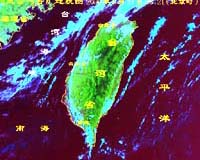
Taipei (UPI) Aug 16, 2005 The Democratic Pacific Union formally inaugurated in Taipei, Taiwan, this past weekend is a non-governmental organization with apparent intergovernmental aspirations, its 28 charter members being the number of democratic nations in and around the Pacific Rim represented among government and non-governmental representatives to the DPU. Another way of looking at the makeup of the organization would be "friends of Taiwan," the democratic island formally known as the Republic of China (Taiwan). Taipei was kicked out of the United Nations in 1971 and replaced by the People's Republic of China, ruled by the Communist Party, its neighbor just about 100 miles to the west, across the Taiwan Straits. The move left Taiwan nearly isolated politically and it continually strives to win friends since it has diplomatic relations with only a handful of nations, the same handful that votes unsuccessfully for its now-annual quest for re-admittance to the world organization. Taipei is making another bid in the upcoming 60th session of the U.N. General Assembly, beginning next month, for a seat. The island of 23 million people is on a slender island of only about 36,000 square miles, slightly less than the states of Maryland and Delaware combined, two-thirds of it rugged mountains. Still, it's an enormous economic miracle according to Taiwan's Institute for Information Industry: No. 1 in production of liquid crystal display monitors, notebook computers, personal digital assistants, cable modems, wireless local area network equipment, semiconductor packaging and provider of computer chip foundry services. Its No. 2 in production of TFT-LCD panels, computer servers and digital still cameras. The institute also says there is an online penetration of 100 percent in schools and government, 81 percent in business, 61 percent in households, or more than 9 million regular internet users, 3.5 million of them broadband subscribers. With an average annual income of about $13,000 in a tropical climate, life is fairly good for nearly all but the 1 percent below the poverty level. So the move to sponsor the DPU is not surprising. It is seen by many observers as Taiwan reaching for more international political recognition, for an international forum it can participate in. But, founder Annette Lu, Taiwan's vice president, who was elected honorary chairwoman of the DPU board of directors, says the DPU is not a means to an end, such as an intergovernmental union, but is in itself an end, an organization aspiring to further democracy, peace and prosperity. Three years in the making, the DPU seeks to "uphold human rights, democracy, the rule of law, the freedom of the press and the independence of the judiciary." In addition to encouraging cooperation among members, the new NGO seeks to establish in Taiwan visiting fellowship and scholarship programs, centers for democratic and women's development, disaster prevention and remote ocean sensing, a Pacific internet university and "a university at sea." A center for economic development also was planned to coordinate the sharing of expertise and to promote sustainable trade and investment among members. The DPU Secretariat was established in Taipei operating under Chen Wei-Jao, former president of National Taiwan University. The resolution set out objectives for the fledgling organization as upholding "human rights, democracy, the rule of law, the freedom of the press and the independence of the judiciary." Heavily funded by Taiwan industry, the resolution "acknowledged Taiwan's successful democratic and economic experience" and Lu's efforts to bring the organization into being. Lu called her keynote address at the inauguration "the Birth of the Blue Civilization in the New Pacific Era," explaining her contention "The key to peace in the 21st century is the Pacific Ocean," reminding all it covers one-third of the earth's surface and is home to 40 percent of the world's population in 30 countries "with more than half of the world's economy." Yes, she hopes there will some day be 30 members and expects it to happen in a few years. She told United Press International she did not receive any adverse reaction from Beijing on the lead up to inauguration of the DPU, adding she would welcome it as a DPU member, "when its government is elected by the people." Attending the inauguration, timed to coincide with the end of 60th anniversary of World War II hostilities in the Pacific Ocean, were presidents Abel Pacheco, of Costa Rica; Oscar Berger Perdomo of Guatemala, and Chen Shui-bian, of Taiwan. Rep. Charles Rangel, D-N.Y., was the U.S. attendee, but not an official representative of Washington. The United States does not have formal diplomatic relations with Taiwan, but does maintain unofficial ties. Rangel said he was honored to be attending the DPU's inauguration because when in the future, people ask, "'What were you doing when peace seemed so elusive?' At least I can say I was in Taiwan fighting for peace and democracy."
Community
 Taiwan Has Produced Three Prototypes Of Cruise Missile: Jane's
 Taipei (AFP) Jan 08, 2006
Taiwan has produced three prototypes of a new cruise missile which could be used to strike the east coast of rival China, an authoritative defence magazine said. |
|
|

| The content herein, unless otherwise known to be public domain, are Copyright 1995-2006 - SpaceDaily.AFP and UPI Wire Stories are copyright Agence France-Presse and United Press International. ESA PortalReports are copyright European Space Agency. All NASA sourced material is public domain. Additionalcopyrights may apply in whole or part to other bona fide parties. Advertising does not imply endorsement,agreement or approval of any opinions, statements or information provided by SpaceDaily on any Web page published or hosted by SpaceDaily. Privacy Statement |