
 |
 |
 |
 |
 |
 |
 |
 |
 |

 |
New Millennium Program Gears Up
JPL universe - January 16, 1998 - The adventurous New Millennium Program made great strides in 1997 in its preparations for a series of missions launching from 1998 to 2003, with many more in the pipeline. The program is a flagship NASA venture whose goal is the development and testing of revolutionary technologies in space flight so that they may be confidently used in science missions of the future. Through a series of deep space and Earth-orbiting missions, the New Millennium Program will validate the essential technologies and capabilities required for challenging, new types of missions to be flown in the next century. In November, Dr. Fuk Li was named program manager, after serving as acting program manager for several weeks following the retirement of veteran JPL manager Kane Casani. Li, a remote sensing expert who most recently served as manager of JPL's Earth Science Program office, has the challenging task of overseeing a wide variety of "faster, better, cheaper" missions whose key technologies typically have never been used in space flight before. A key element of the New Millennium Program is the teaming of government with industry and academia to improve America's technological infrastructure. For this purpose, a series of Integrated Product Development Teams composed of private firms, universities and research labs are now working to identify, design and deliver technologies needed to enable future science missions so that they can be tested through upcoming New Millennium missions. Those missions begin this summer with Deep Space 1, whose launch period starts July 1. Flying by asteroid McAuliffe, then by Mars and finally by comet West-Kohoutek-Ikemura, DS1 will be the first spacecraft ever to rely on solar electric propulsion rather than conventional propellant-based systems for its main source of thrust. Solar electric propulsion is but one of 12 advanced technologies to be demonstrated on this high-risk mission. Others include new telecommunications equipment; autonomous optical navigation; advanced solar arrays; a miniature integrated ion and electron spectrometer; microelectronic devices; and a miniaturized camera and imaging spectrometer that will take pictures and make chemical maps of the target asteroid and comet. Late last summer, the DS1 bus arrived at JPL from the Arizona facilities of DS1's industry partner, Spectrum Astro, and the spacecraft has since been almost fully assembled. It is now preparing for testing in the 25-foot space simulator in Building 150 in preparation for its delivery to the Cape in early spring. Deep Space 2 will send two small probes weighing two kilograms (4.5 pounds) each aboard the 1998 Mars Surveyor lander to study Mars' soil and atmosphere. In-situ instrument technologies for making direct measurements of the Martian surface will include a meteorological pressure sensor, temperature sensors for measuring the thermal properties of the Martian soil, and a subsurface soil collection and analysis instrument. 1997 saw many crucial tests of the probe and instrumentation design, nearly all taking place at the New Mexico Institute of Mining Technology's Energetic Materials Research and Test Center in Socorro, N.M. A critical test took place on Oct. 29, when two of the most sensitive subsystems, a battery assembly and a tiny motor and drill assembly for extracting a subterranean soil sample, were successfully qualified. Fully integrated systems testing will take place in 1998 in preparation for DS2's January 1999 launch. An advanced, lightweight scientific instrument designed to produce visible and short-wave infrared images of Earth's land surfaces was selected as the New Millennium Program's first Earth-observing mission. Launching in May 1999, Earth Orbiter 1 is managed by NASA's Goddard Space Flight Center in Greenbelt, Md. Like DS1, it too will validate 12 technologies. The mission will serve multiple purposes, including providing remote-sensing measurements of Earth that are consistent with data collected since 1972 by the Landsat series of satellites, which is used by farmers, foresters, geologists and city planners. In addition, it will acquire data with finer spectral resolution, a capability long sought by many scientists studying Earth and its environs, and it will lay the technological groundwork for inexpensive, more compact imaging instruments in the future. In 1997, a successful EO-1 critical design was conducted. Focal plane and telescope elements are on schedule to be delivered to MIT's Lincoln Laboratory, the instrument integrator, in the first half of 1998. All of the major structural elements of the bus are fabricated, and the mechanical assembly and flight electrical harness are now in process. Spacecraft bus-level integration will begin this spring, and the instrument is due for bus integration at the end of 1998. In mid-November, NASA announced that Earth Orbiter 2 will encompass the Space-Readiness Coherent Lidar Experiment (Sparcle), flying in the cargo bay of the space shuttle. Scheduled to launch in 2001, its goal is to determine whether a space-based sensor can accurately measure global winds within Earth's atmosphere from just above the surface to a height of about 16 kilometers (10 miles). Among the many candidate New Millennium Program launches are Deep Space 3, an interferometry mission encompassing three spacecraft orbiting the sun in formation, and Deep Space 4/Champollion, the first landing of a science payload on the nucleus of an active comet. Landing in 2005, DS4 will analyze the nucleus; conduct an atomic, molecular and mineralogical composition assessment down to a depth of one meter; assess such physical properties as thermal conductivity; send back both standard and stereographic images; and attempt to return a nucleus sample to Earth by 2010. 1997's DS4 activities have included developing detailed designs of the lander and carrier spacecraft, testing of spacecraft anchoring systems at the China Lake Naval Weapons Testing Center in Ridgecrest, Calif., and the construction of a lab at JPL dedicated to the creation of cometary simulant materials that replicate the possible properties of a comet nucleus for further spacecraft anchor and drilling tests.
Email This Article Comment On This Article Related Links Space
 Satellite Launch To Boost DTH In India
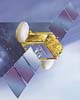 Calcutta, India (SPX) Dec 28, 2005
The successful launch Thursday of India's heaviest satellite from spaceport of Kourou in French Guyana may have boosted the country's space research efforts to yet another level, but it has also lifted the spirits of at least three Direct-To-Home televisions broadcasters, one of which has been waiting for years to launch its services in India. |
|
|

|
|
|
|
|
|
|
|
|
|
|
|
| The content herein, unless otherwise known to be public domain, are Copyright 1995-2006 - SpaceDaily.AFP and UPI Wire Stories are copyright Agence France-Presse and United Press International. ESA PortalReports are copyright European Space Agency. All NASA sourced material is public domain. Additionalcopyrights may apply in whole or part to other bona fide parties. Advertising does not imply endorsement,agreement or approval of any opinions, statements or information provided by SpaceDaily on any Web page published or hosted by SpaceDaily. Privacy Statement |

