|
 |
 |
 |
 |
 |
 |
 |
 |

 |
New Material To Be Tested On International Space Station
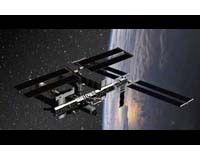
Grand Forks ND (SPX) Sep 21, 2006 The Energy and Environmental Research Center (EERC) announced today it has delivered a suite of unique materials to NASA for testing on the International Space Station (ISS) sometime during the summer of 2007. The materials, primarily comprising silicon carbide, which is extremely hard ceramic, could be used as meteorite and heat shield protection on the space shuttle and other spacecraft. The EERC silicon carbide structures can withstand temperatures of 1450C or more, which is much higher than other silicon carbide materials made in a similar manner. The ability to withstand these higher temperatures is critical during entry into space and reentry into the earth's atmosphere. This was a key issue in the 2003 Columbia Space Shuttle disaster. "These unique materials are made through a process which produces a much higher-temperature and tougher product than similar commercial materials and can enhance the quality of key components on spacecraft, resulting in increased safety on future space missions," said EERC Associate Director for Research Tom Erickson. The EERC materials also have another unique feature that can make them more resistant to meteoroid penetration and usable for aerobreaking. Most currently available ceramic materials are prone to shattering upon impact by an object. The EERC materials are porous, which allows them to be combined with other materials, making them shatter-resistant. "Because of their potential use on spacecraft, we will expose small sections of the materials to low-earth orbit during the Materials International Space Station Experiment 6 (MISSE-6) mission," said John Hurley, EERC Senior Research Advisor and material inventor. "Four separate pieces of the material structures will be installed on each side of the space station for 4 to 6 months and undergo exposure to severe ultraviolet radiation and monoatomic oxygen," said Hurley. Some other potential uses on board the space shuttle or the ISS include heat exchanger tubing, burner nozzles, turbine blades, and very high-temperature mechanical fasteners such as nuts and bolts. At lower temperatures, the material can be used for tough, dent-resistant coatings in power and industrial applications such as grinding and cutting of hard materials and in high-impact scenarios such as lightweight bullet-proof armor. These materials were initially developed to meet a unique need within the power industry. "This is a wonderful example of a wide variety of spin-off opportunities derived from activities at the EERC," said EERC Director Gerald Groenewold. "The material work we do here is motivated by energy-related topics, but every research project and every technology developed here has other opportunities that go beyond the boundaries of the initial intended use," he said. The materials will make approximately 2900 orbits and travel about 75 million miles around the Earth. The samples will return on a shuttle flight in late 2007 or early 2008. Community Email This Article Comment On This Article Related Links University of North Dakota Space Station News at Space-Travel.Com Space Technology News - Applications and Research
 Ducommun Announces Contract Award From NASA For Advanced Sensor Testbeds
 Los Angeles CA (SPX) Sep 15, 2006
Ducommun has announced that Miltec, a wholly owned subsidiary of Ducommun Technologies, Inc., and NASA, with the support of the US Army Redstone Arsenal's Aviation and Missile Research, Development and Engineering Center (AMRDEC), have teamed to develop new minimally intrusive sensor applications for launch vehicle environments. |
|
|

| The content herein, unless otherwise known to be public domain, are Copyright 1995-2006 - SpaceDaily.AFP and UPI Wire Stories are copyright Agence France-Presse and United Press International. ESA PortalReports are copyright European Space Agency. All NASA sourced material is public domain. Additionalcopyrights may apply in whole or part to other bona fide parties. Advertising does not imply endorsement,agreement or approval of any opinions, statements or information provided by SpaceDaily on any Web page published or hosted by SpaceDaily. Privacy Statement |