|
 |
 |
 |
 |
 |
 |
 |
 |

 |
New Evaluation Brigade To Test Emerging Warfighter Technologies
Fort Bliss TX (AFNS) Jan 02, 2007 A new brigade here will test some of the most revolutionary concepts and systems being developed for future warfighters, report how they operate under field conditions, and ultimately speed their fielding to troops on the battlefield. The new Evaluation Brigade Combat Team being stood up here will test 18 major systems being developed for the Army's Future Combat Systems program, explained Col. Michael Wadsworth, chief of training and leader development for the Future Force Integration Directorate here. "This is the most ambitious and far-reaching modernization the Army has had since World War II," he said. The program's goal, Wadsworth explained, is to tap into the most advanced technologies possible "to enable soldiers and leaders to see the enemy first and understand his intentions. "And once we understand what the enemy is going to do," he added, "we can act first and finish decisively, which is the whole notion of the Future Combat System." The FCS will offer soldiers detailed battlefield information, provided through an advanced data and communications network to give them the upper hand in combat. By knowing what the enemy is up to, FCS-equipped brigade combat teams will be able "to act first on their own initiative to defeat the enemy on terms favorable to us," Wadsworth said. The Future Force Integration Directorate is establishing a blueprint for that future force as it stands up the new Evaluation Brigade Combat Team and uses it as an operational test bed for new systems. Within the next six months, the brigade team is expected to reach its full strength of just under 1,000 troops. "Basically, we're standing up an organization to inform the Army if (the FCS program) is doing what we think it will do," Wadsworth said. As the evaluation brigade, the Future Force Integration Directorate is developing the doctrine, organizational structure, training programs, and tactics, techniques and procedures it will need to operate. Like the systems the brigade is testing, this groundwork will be tweaked along the way to ensure it's on target, Wadsworth said. "We'll hand the brigade the concepts, get feedback and move forward," he said. "The beauty of this is that we'll have actual soldiers on the ground with the equipment, and these soldiers will advise us as we move this concept forward." The Evaluation BCT will use a mixture of live training, experimentation and simulation to test systems ranging from sensors to automated systems to manned vehicles over the next 10 to 12 years. Testing will be conducted, both here and at neighboring White Sands Missile Range, N.M., through four "spinouts" that will enable the Army to build the new technology over time, Wadsworth said. During Spinout 1, in fiscal 2008, the evaluation brigade will evaluate five new systems. These include the Intelligent Munitions System; the Tactical Unmanned Ground Sensor, which detects and reports on ground movement; the Urban Unmanned Ground Sensor, which detects motion inside a building; the Non-Line-of-Sight Launch System, nicknamed "rockets in a box"; and a battle command surrogate. The second spinout, in 2010, will test a series of unmanned aerial vehicles. Spinout 3 will test six varieties of unmanned ground vehicles. The final spinout will evaluate eight kinds of manned ground vehicles that operate from a common platform, as well as the network. The network is evolving incrementally, with additional sensors added to it with each spinout, Wadsworth explained. The goal is a fully capable, fully equipped Future Combat System brigade combat team supported by a state-of-the-art network in 2014. But the Army doesn't intend to wait until then to get some of the best new technologies being developed to warfighters in the field, Wadsworth said. Some, including unmanned aerial vehicles that can be carried in a backpack and small unmanned ground vehicles that can carry sensors into buildings, caves and other dangerous spots, are already in limited use in the combat theater. Gen. Peter Schoomaker, Army chief of staff, emphasized the importance of the Future Combat System, and of getting its capabilities into the operational force as quickly as possible, in October during his keynote address at the Association of the U.S. Army convention in Washington. "The goal is to enable the soldiers to see first, understand first, act first and finish decisively," Schoomaker said. "I want there to be no doubt that we are totally committed to fielding the future force, enabled by the FCS." Community Email This Article Comment On This Article Related Links Future Combat Systems The latest in Military Technology for the 21st century at SpaceWar.com The latest in Military Technology for the 21st century at SpaceWar.com
 Northrop Grumman Awarded MoD CUTLASS Program To Provide NextGen Bomb Disposal Robots
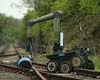 London, UK (SPX) Dec 29, 2006
Northrop Grumman Corporation has announced that its Remotec UK Ltd. subsidiary has been appointed prime contractor for Phase II of the Ministry of Defence (MoD) CUTLASS robotics programme. The CUTLASS programme will provide the next generation of unmanned ground vehicle for explosive ordnance disposal (EOD) to be used by the MoD for anti-terrorism operations worldwide. The bulk of deliveries will take place in 2010. |
|
|

| The content herein, unless otherwise known to be public domain, are Copyright 1995-2006 - SpaceDaily.AFP and UPI Wire Stories are copyright Agence France-Presse and United Press International. ESA PortalReports are copyright European Space Agency. All NASA sourced material is public domain. Additionalcopyrights may apply in whole or part to other bona fide parties. Advertising does not imply endorsement,agreement or approval of any opinions, statements or information provided by SpaceDaily on any Web page published or hosted by SpaceDaily. Privacy Statement |