|
 |
 |
 |
 |
 |
 |
 |
 |

 |
New ESA Website Targeting SMEs
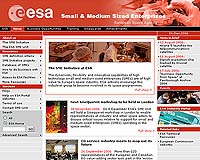
Paris, France (ESA) Dec 11, 2006 Innovations from small high-tech companies are of high value to Europe's space industry, and since 1997 ESA has taken special measures to encourage this type of firm to get involved in its space programmes, and with this new program ESA now offers a dedicated website to further promote this initiative: the Small and Medium Sized Enterprises (SMEs) website. "The objective is to strengthen the communication with small- and medium-sized enterprises, a proven strong source of innovative technologies which have led to several new and ground-breaking solutions flown on ESA's satellites," explains Nora Bougharouat, head of ESA's SME Unit. Innovation has become an even stronger necessity for strengthening Europe's competitiveness with today's globalisation and the enlarged European Union. SMEs can play an especially important role in this process, proposing innovative technological solutions to achieve better results. Europe possesses many world-class SMEs in niche areas which have contributed to Europe's space programmes. In addition to providing successful technological solutions, the flexibility and effectiveness of these small firms have made them valuable partners. Specialist SMEs have shown themselves particularly suited to pan-European ventures. This contributes to a common European space industry identity, taking the best from all countries, big or small. The SME website is intended as a 'meeting place' for these small firms to identify new partners and opportunities, and to become more visible at a European level. The new SME website is an integral part of the Space Intelligence, Engineering and Quality Network (SineQuaNet) - the latest initiative launched by ESA's SME Unit. SineQuaNet was launched in November 2005, and is carried out in cooperation with DG Research of the European Commission. The network is planned to become a genuine structuring tool for SMEs already operating in, or wishing to enter, the space business, by offering them support in engineering and industrial processes. This is just one of the measures which ESA has taken since 1997 to encourage small- and medium-sized enterprises to get involved in its space programmes in response to the specific request by the ESA Council on 4 March 1997. This includes the set-up of the SME Initiative, special procurement conditions promoting the participation of SMEs in some of the Agency's programmes and a number of other schemes targeting especially start-up companies and smaller firms. The SME website offers up-to-date information for SMEs within the following sections: Business Opportunities to present opportunities of special interest to SMEs, such as invitations to tender, announcements of opportunity, etc. Training: This section announces new training opportunities and includes material from training courses held previously, all available for downloading. SineQuaNet concerning the latest SME Unit initiative aimed at SMEs, supported by the European Commission. By providing on-line interface to an expert database, the SineQuaNet area permits SMEs to search for sources of specific expertise, or for access to test and calibration facilities. Companies and organisations able to provide expertise and/or facilities can also present themselves. Achievements with news on innovative technologies and special achievements of SMEs. Profiles and technology/business successes of SMEs, who have benefited by working with ESA, are featured. Resources listing a number of sources of information likely to be helpful for SMEs when doing business with ESA and in space in general. The website targets SMEs and also those who wish to work with them. For example large companies can find potential SME business partners by searching the SME Database, or can seek out a specific type of expertise by visiting the SME projects' database, which presents many of the achievements SMEs have developed under contract to ESA. Each year new results are added as contracts under the SME Initiative are completed. Community Email This Article Comment On This Article Related Links SMEs at ESA The latest information about the Commercial Satellite Industry The latest information about the Commercial Satellite Industry
 French Finance Group CDC Buys 25.5 Percent Stake In Eutelsat
 Paris (AFP) Dec 07, 2006
Powerful French state financial body the Caisse des Depots is to buy 25.5 percent of Eutelsat, one of the world's top three satellite operators, from the investment fund Eurazeo, the Caisse Des Depots said Thursday in a statement. The Caisse des Depots will pay 862.7 million euros (1.15 billion dollars) to Eurazeo and end up with 26.15 percent of the satellite operator. |
|
|

| The content herein, unless otherwise known to be public domain, are Copyright 1995-2006 - SpaceDaily.AFP and UPI Wire Stories are copyright Agence France-Presse and United Press International. ESA PortalReports are copyright European Space Agency. All NASA sourced material is public domain. Additionalcopyrights may apply in whole or part to other bona fide parties. Advertising does not imply endorsement,agreement or approval of any opinions, statements or information provided by SpaceDaily on any Web page published or hosted by SpaceDaily. Privacy Statement |