|
 |
 |
 |
 |
 |
 |
 |
 |

 |
New Computer Model Promises Detailed Picture of Worldwide Climate
Boulder - Jul 04, 2002 Capping two years of research, a nationwide group of over 100 scientists has created a powerful new computer model of the Earth's climate. The model surpasses previous efforts by successfully incorporating the impact of such variables as ocean currents and changes in land-surface temperatures. Researchers will use the model, called CCSM-2 (Community Climate System Model, version 2) to probe how our climate works and to experiment with "what-if" scenarios to predict what our climate may be like in the future. The model will also look at past climate. For example, researchers plan to perform an extended, multicentury simulation of past shifts in the climate's equilibrium. The model's increased capabilities will permit new types of studies, such as the "Flying Leap Experiment," which will track fossil fuel carbon emissions as they are dissolved in the oceans and subsequently released back into the atmosphere. Jeffrey Kiehl, a key leader in development of the model at the National Center for Atmospheric Research, expects the CCSM-2 to play an integral role in the next climate assessment by the Intergovernmental Panel on Climate Change, the international organization that issues periodic assessments of global climate change. Based at NCAR, the model is funded by the National Science Foundation and the Department of Energy. "The model is better [than its earlier version] at simulating phenomena with worldwide climate implications, such as El Nino," says Kiehl. "The new version has higher spatial resolution in both oceans and sea ice, and the atmosphere is represented by a larger number of vertical layers." To achieve the extensive modifications in the latest version, which was released last month, scientists applied the model to specific problems. For example, they weighed the climatic impacts of past volcanic eruptions, fluctuations in ocean salinity, changes in land vegetation, and the thickness of sea ice. The resulting model has far more data than the earlier version, allowing scientists to make more detailed climate projections. "A coordinated community activity on this scale is rare in the climate sciences," says Kiehl. The contributors worked in groups on land, ocean, sea ice, and other components of the model toward the single, common goal of capturing the Earth's climate system. It was truly a collaborative effort." Since 1983, NCAR scientists have been refining global climate models that are freely available to researchers worldwide. CCSM-2, which supercedes the first CCSM created in 1998, will be used to produce improved simulations of average climate and climate variability. Richard Anthes, president of the University Corporation for Atmospheric Research (which manages and operates NCAR) says: "The CCSM effort is a great example of the trend towards increasing collaboration among research institutions on complex and important scientific problems." Community Email This Article Comment On This Article Related Links CCSM Model Data Access For Researchers SpaceDaily Search SpaceDaily Subscribe To SpaceDaily Express Dirt, rocks and all the stuff we stand on firmly
 Magnetic Reconnection Region Larger Than 2.5 Million Km Found In The Solar Wind
 Paris (ESA) Jan 12, 2006
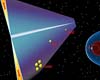
Using the ESA Cluster spacecraft and the NASA Wind and ACE satellites, a team of American and European scientists have discovered the largest jets of particles created between the Earth and the Sun by magnetic reconnection. This result makes the cover of this week's issue of Nature. |
|
|

| The content herein, unless otherwise known to be public domain, are Copyright 1995-2006 - SpaceDaily.AFP and UPI Wire Stories are copyright Agence France-Presse and United Press International. ESA PortalReports are copyright European Space Agency. All NASA sourced material is public domain. Additionalcopyrights may apply in whole or part to other bona fide parties. Advertising does not imply endorsement,agreement or approval of any opinions, statements or information provided by SpaceDaily on any Web page published or hosted by SpaceDaily. Privacy Statement |