|
 |
 |
 |
 |
 |
 |
 |
 |

 |
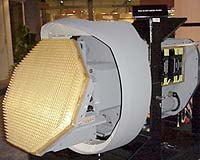
Navy Begins Operational Evaluation Of Revolutionary Raytheon AESA Radar
El Segundo CA (SPX) Jul 07, 2006 Raytheon Company's ground-breaking APG-79 active electronically scanned array (AESA) radar for the F/A-18 E/F Super Hornet has been cleared to enter the U.S. Navy's operational evaluation (OPEVAL) program. "This powerhouse of a program remains solidly on track to meet our commitment to the customer," Erv Grau, vice president for the Air Combat Avionics Group of Raytheon Space and Airborne Systems, said. "The radar continues to deliver high performance and solid reliability that will truly provide aircrews a new transformational capability in the fleet. We're excited about the beginning of operational evaluation and very confident the system will exceed the rigorous expectations of our customer." In mid-May an AESA-equipped Super Hornet detected and tracked multiple targets at exceptional stand-off distances and completed a series of live-fire tests with Raytheon's Advanced Medium Range Air-to-Air Missile (AMRAAM). This engagement included acquiring, tracking and targeting airborne drones while delivering multiple AMRAAMs and supporting several data links. Full situational awareness was maintained throughout the engagement. The final testing of the integration of the weapon systems and the radar concluded this June with another flawless launch of multiple AMRAAMs against multiple long-range targets, indicating the radar's readiness for OPEVAL entry. "We're extremely pleased with our progress," Roger Besancenez, Boeing program manager, said. "Moving the program forward in record time has been our constant objective, and the fact that we're continuing to meet the Navy's accelerated development schedule is a tremendous accomplishment." Grau said Raytheon would be discussing the program's recent successes during the Farnborough International Air Show in England July 17-23. "We're looking forward to literally telling the world about this outstanding radar," he said. "All system components from the array in the front through the software that operates the radar to the processor in the back are new. That's why we consider it revolutionary. Bringing it together in record time has been one of Raytheon's biggest challenges to date, but we've done it." Capt. Donald A. Gaddis, who manages the F/A-18 program for the Navy, called the AESA system "the result of a true team effort." "The team marshaled some of the best talent from Raytheon, Boeing and the Navy," he said. "This is a key step forward in realizing the Navy's vision of a network centric-enabled fleet." Community Email This Article Comment On This Article Related Links The latest in Military Technology for the 21st century at SpaceWar.com The latest in Military Technology for the 21st century at SpaceWar.com
 BAE Systems Wins Contracts For Electro-Magnetic Rail Gun Programs
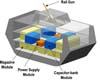 Minneapolis MN (SPX) Jul 07, 2006
BAE Systems was awarded two contracts for development of an electro-magnetic gun system capable of deployment on board naval surface combatant ships. |
|
|

| The content herein, unless otherwise known to be public domain, are Copyright 1995-2006 - SpaceDaily.AFP and UPI Wire Stories are copyright Agence France-Presse and United Press International. ESA PortalReports are copyright European Space Agency. All NASA sourced material is public domain. Additionalcopyrights may apply in whole or part to other bona fide parties. Advertising does not imply endorsement,agreement or approval of any opinions, statements or information provided by SpaceDaily on any Web page published or hosted by SpaceDaily. Privacy Statement |